Norms Restoration of 1939 Leyland TD5 [1635]
2025
Body November
Norman Julian 4th Nov
Today I was looking at trying to re-use some of these old parts off the bonnet as I can.
I was trying to understand how the bonnet attached to the bus so as to get an accurate measurement on why the
bonnet never sat right in my opinion in its natural position.
I then realised it didn't because at some stage in its life a modification was done on how the bonnet sat.
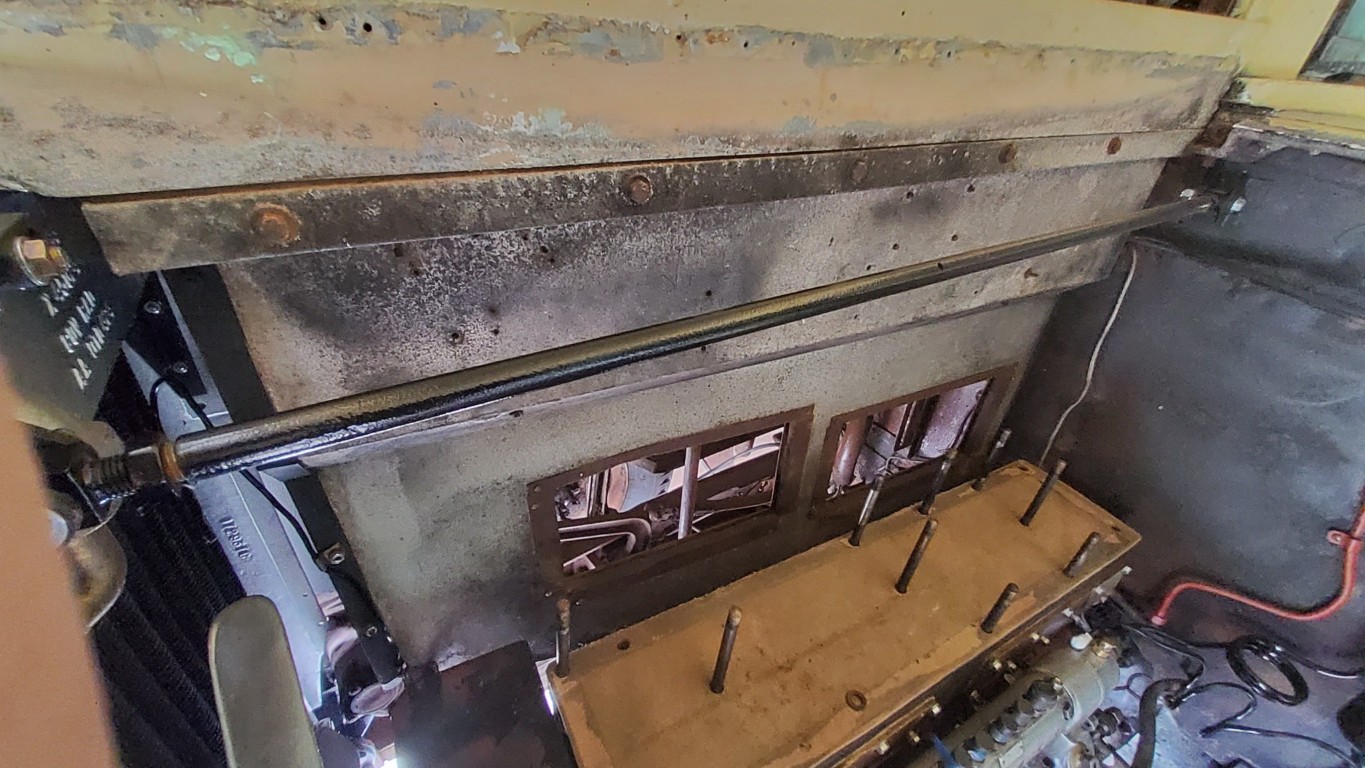
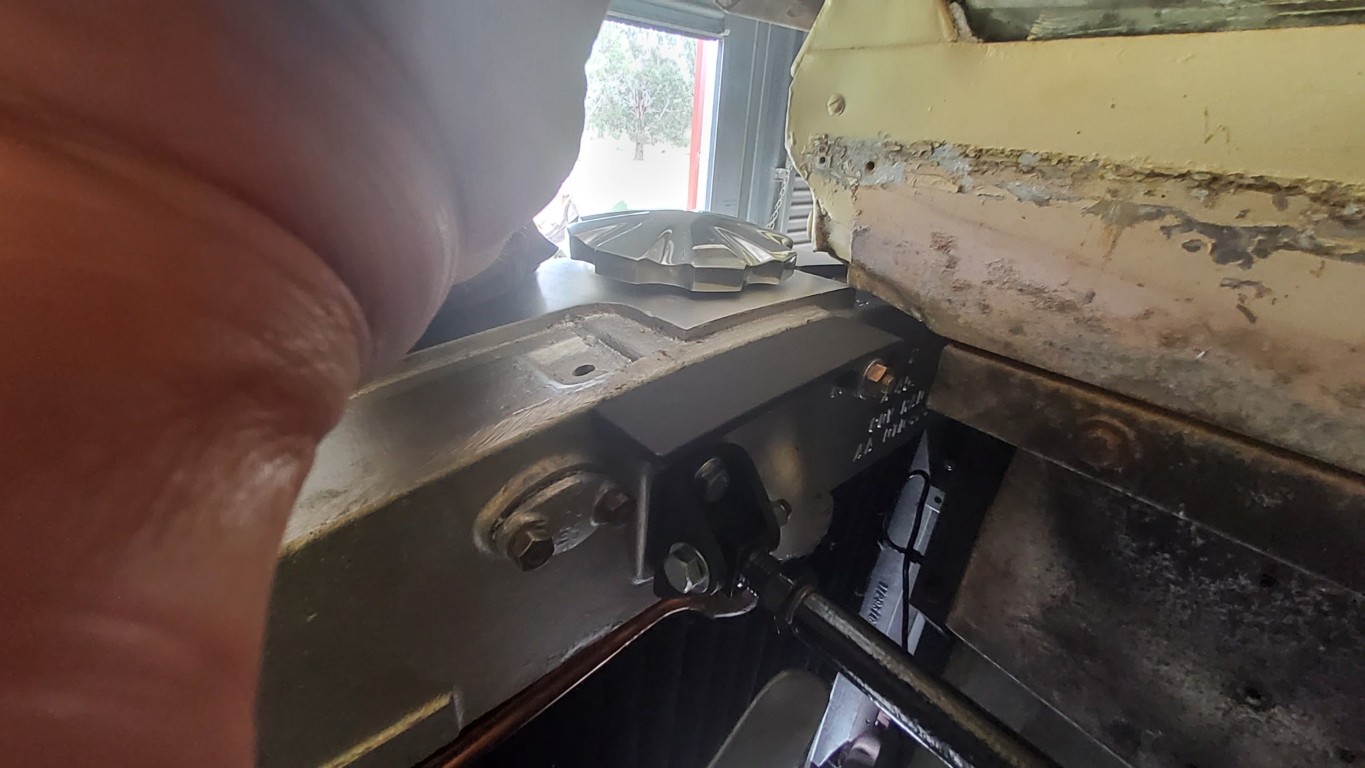
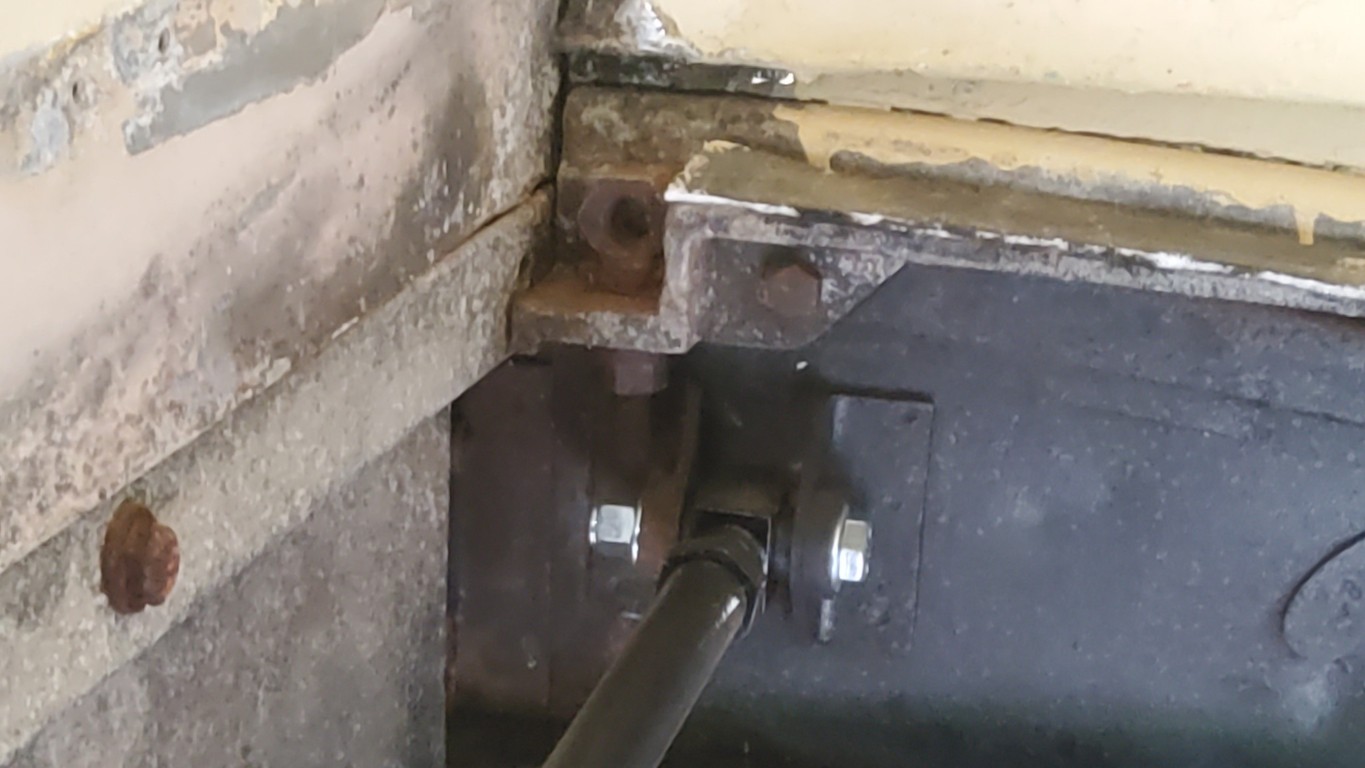
The way it suppose to sit ( in my opinion) is those 2 pins that there is one on either end sit in a corresponding hole
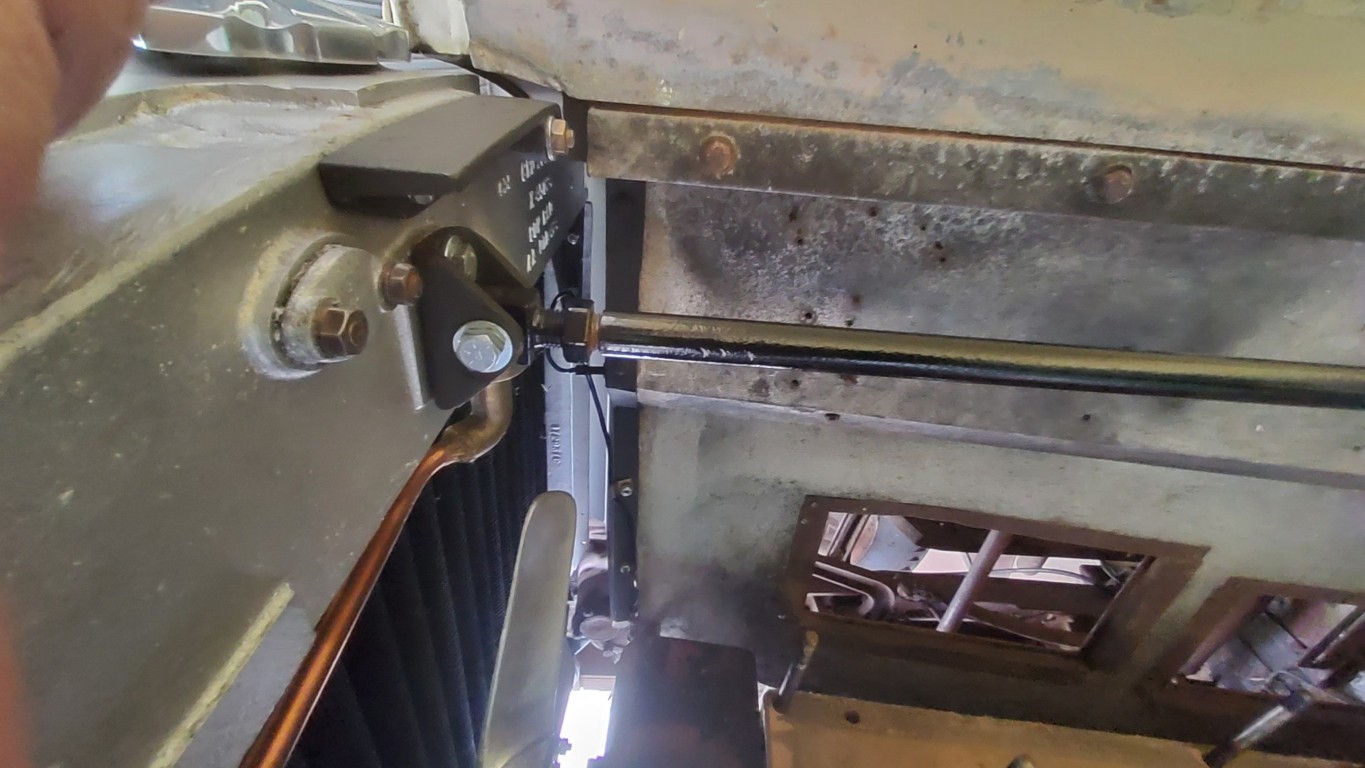
(as in picture) the black steel tube that goes from radiator to firewall turns which enables the radiator
to move in and out at the top.
If you have ever seen or used a turnbuckle, that is exactly what this tube does.
One left hand thread allows the thread to turn inwards and the normal thread goes in the opposite.
When you wind it one way it allows you to place the bonnet on and then turn it back the other way brings
the radiator in to support the bonnet.
Obviously, this was too slow and cumbersome for someone, so they put a piece of rubber on the end to keep
the rattling noise to a minimum.
By doing that the bonnet end on that side just sat in a groove which enabled you just to lift the bonnet up and off.
That's my guess.
Because of this and ware and tare, I will have to make new ones.
I will put everything back together the way it was meant to be.
Today I was looking at trying to re-use some of these old parts off the bonnet as I can.
I was trying to understand how the bonnet attached to the bus so as to get an accurate measurement on why the
bonnet never sat right in my opinion in its natural position.
I then realised it didn't because at some stage in its life a modification was done on how the bonnet sat.
The way it suppose to sit ( in my opinion) is those 2 pins that there is one on either end sit in a corresponding hole
(as in picture) the black steel tube that goes from radiator to firewall turns which enables the radiator
to move in and out at the top.
If you have ever seen or used a turnbuckle, that is exactly what this tube does.
One left hand thread allows the thread to turn inwards and the normal thread goes in the opposite.
When you wind it one way it allows you to place the bonnet on and then turn it back the other way brings
the radiator in to support the bonnet.
Obviously, this was too slow and cumbersome for someone, so they put a piece of rubber on the end to keep
the rattling noise to a minimum.
By doing that the bonnet end on that side just sat in a groove which enabled you just to lift the bonnet up and off.
That's my guess.
Because of this and ware and tare, I will have to make new ones.
I will put everything back together the way it was meant to be.
Norman Julian
The rod that turns for either end to go in or out.
Norman Julian
Where that nut is on the right side of the radiator shows adjacent to it a hole for the bonnet rod to sit in.
Norman Julian
The hole on the firewall for the rod on the opposite side of the bonnet.
Norman Julian
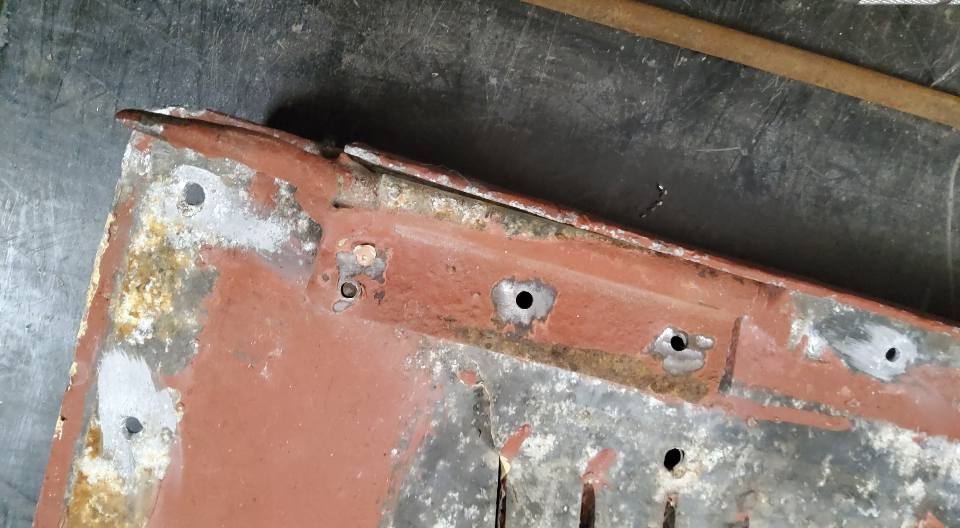
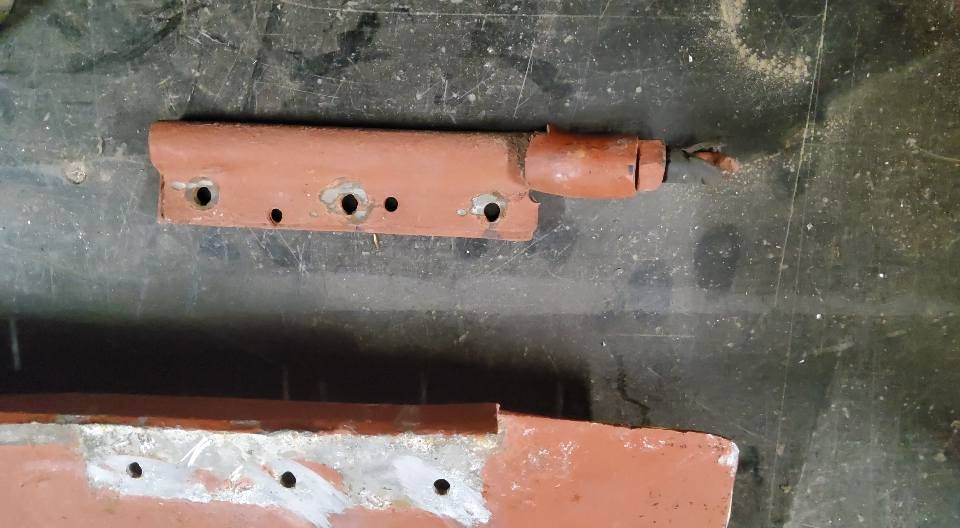
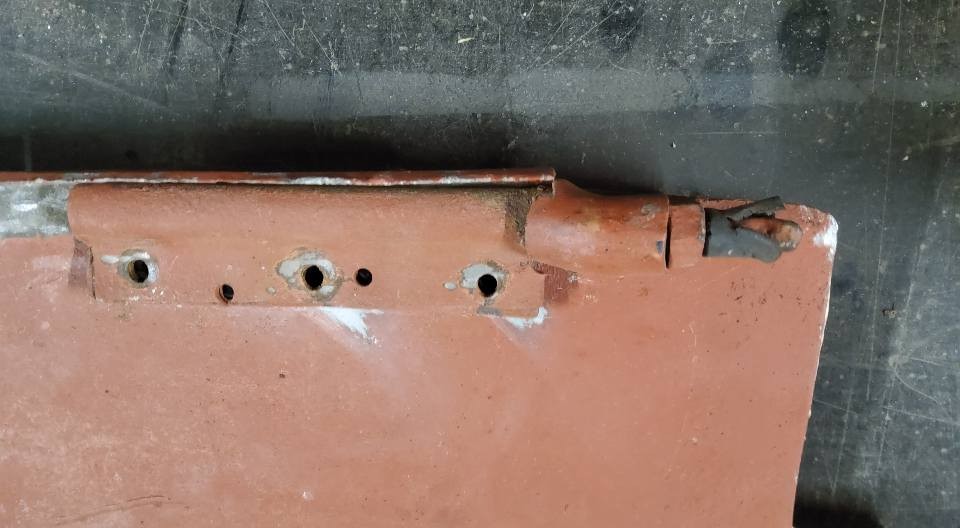
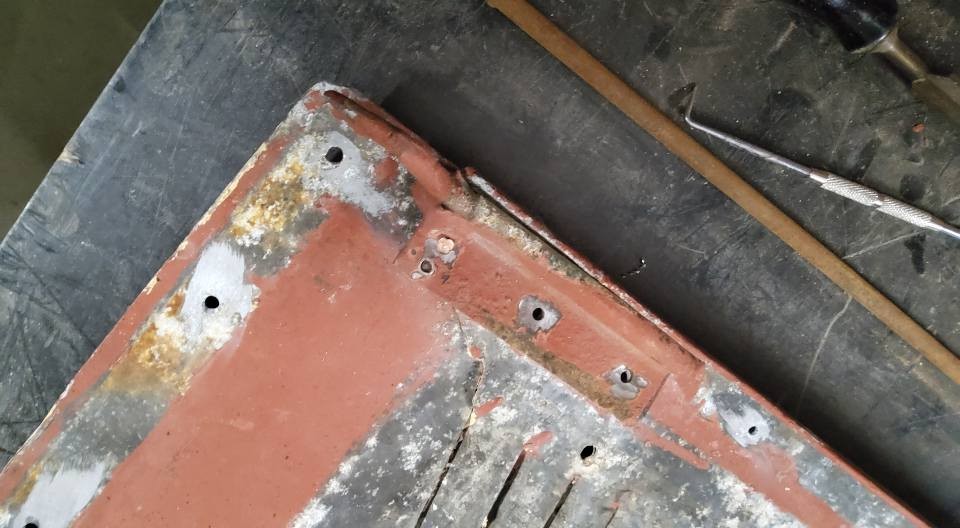
This is what was on the right side of the bonnet. Clearly to keep the rattling to a minimum.
Norman Julian
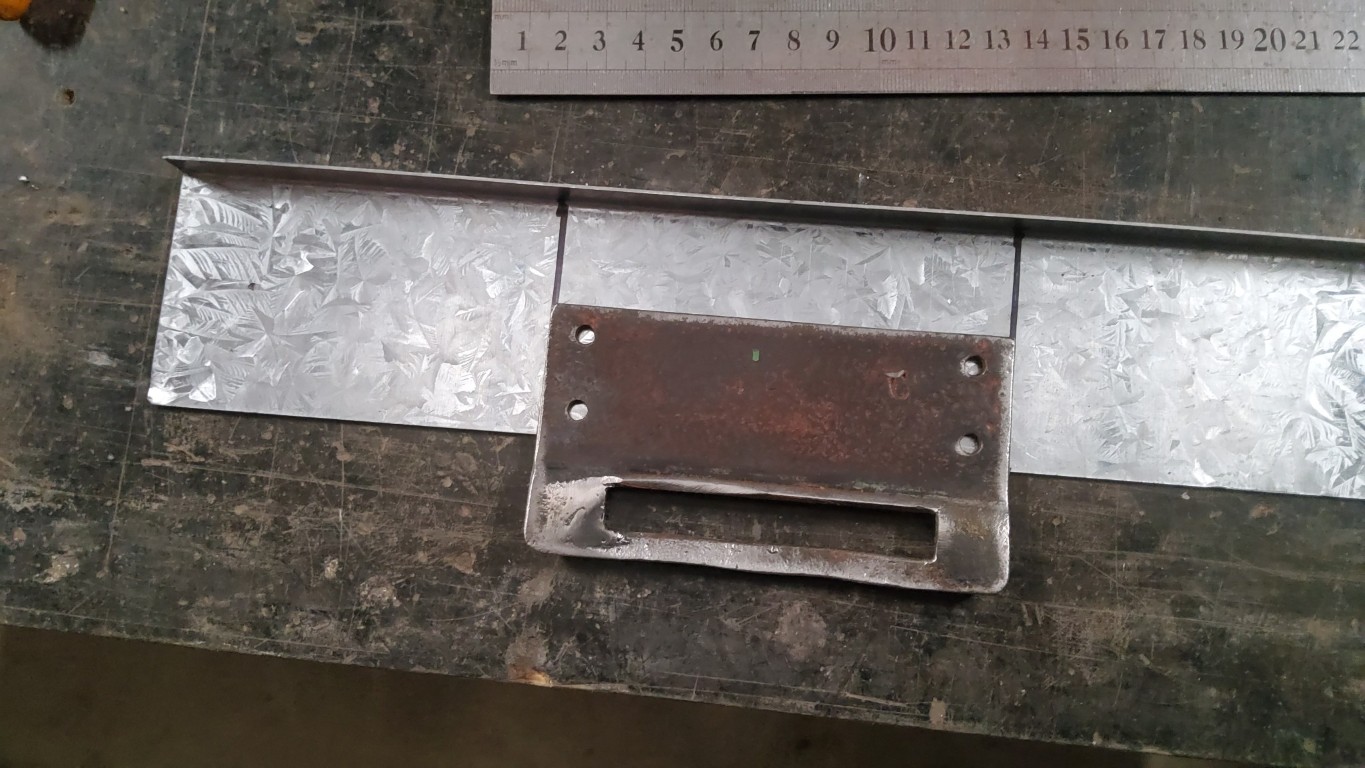
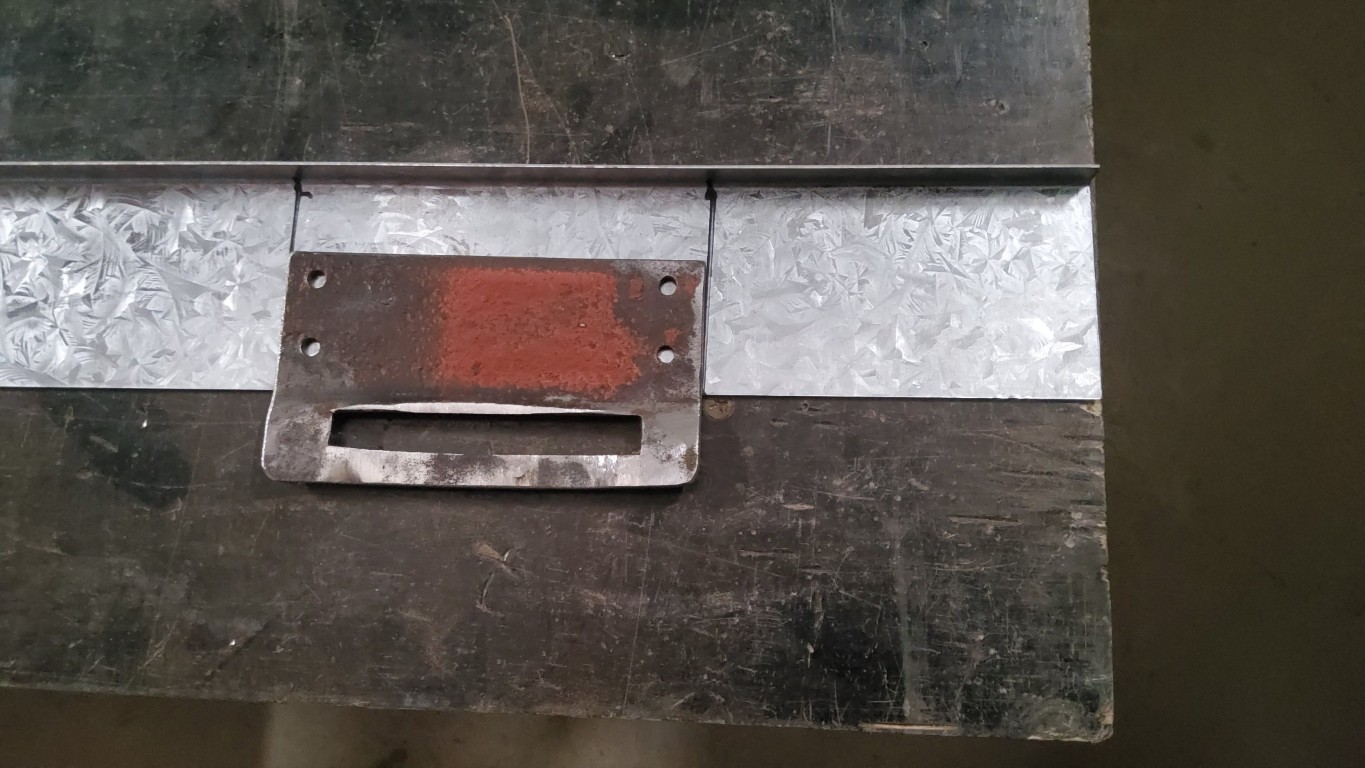
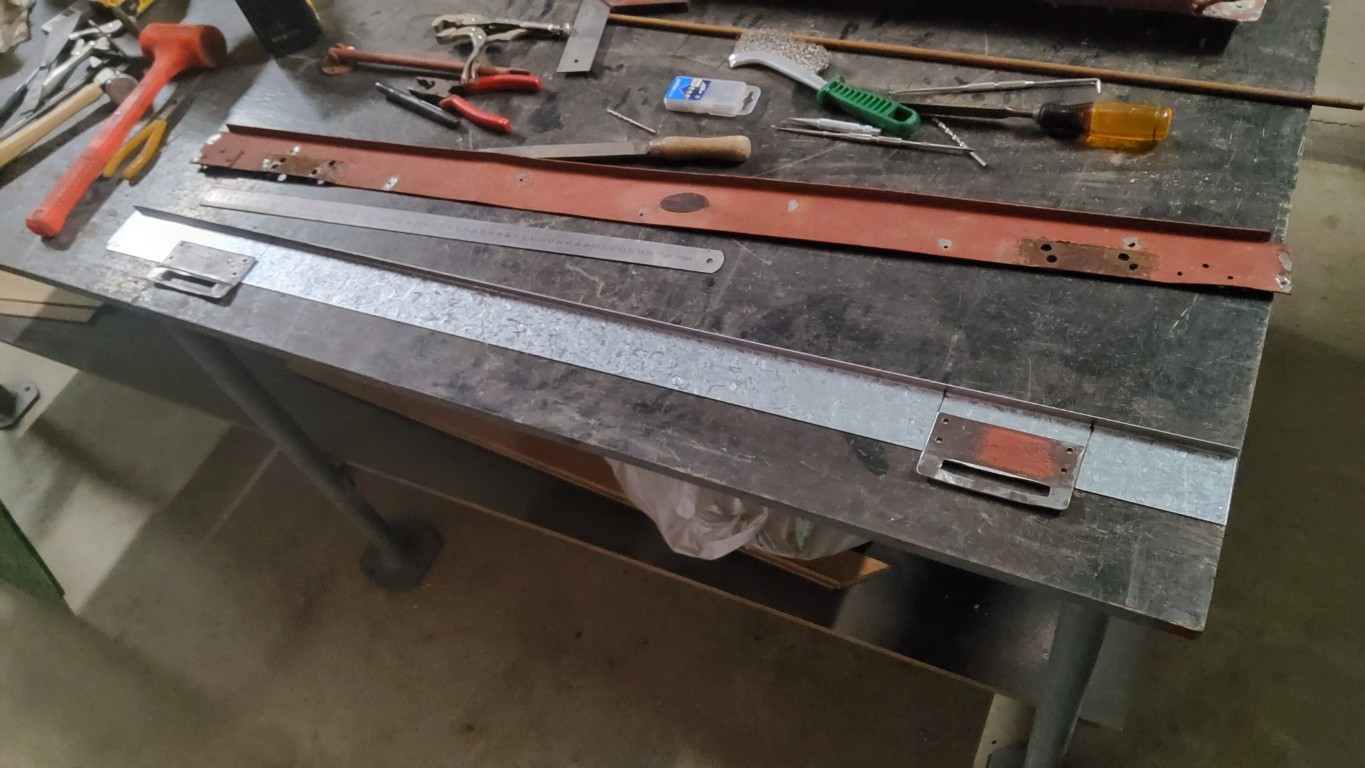
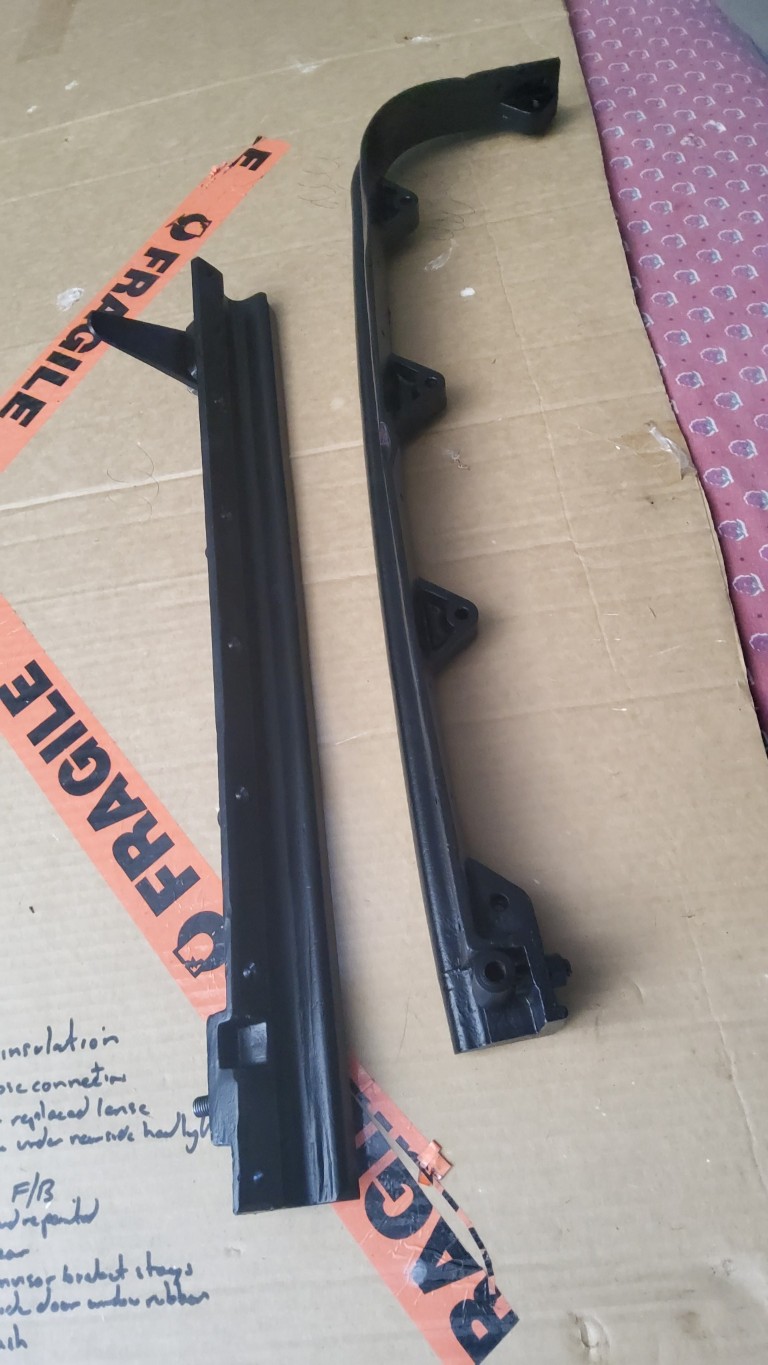
This is the new piece with the side panel carrying brackets ready to go back on.
Norman Julian 4th Nov
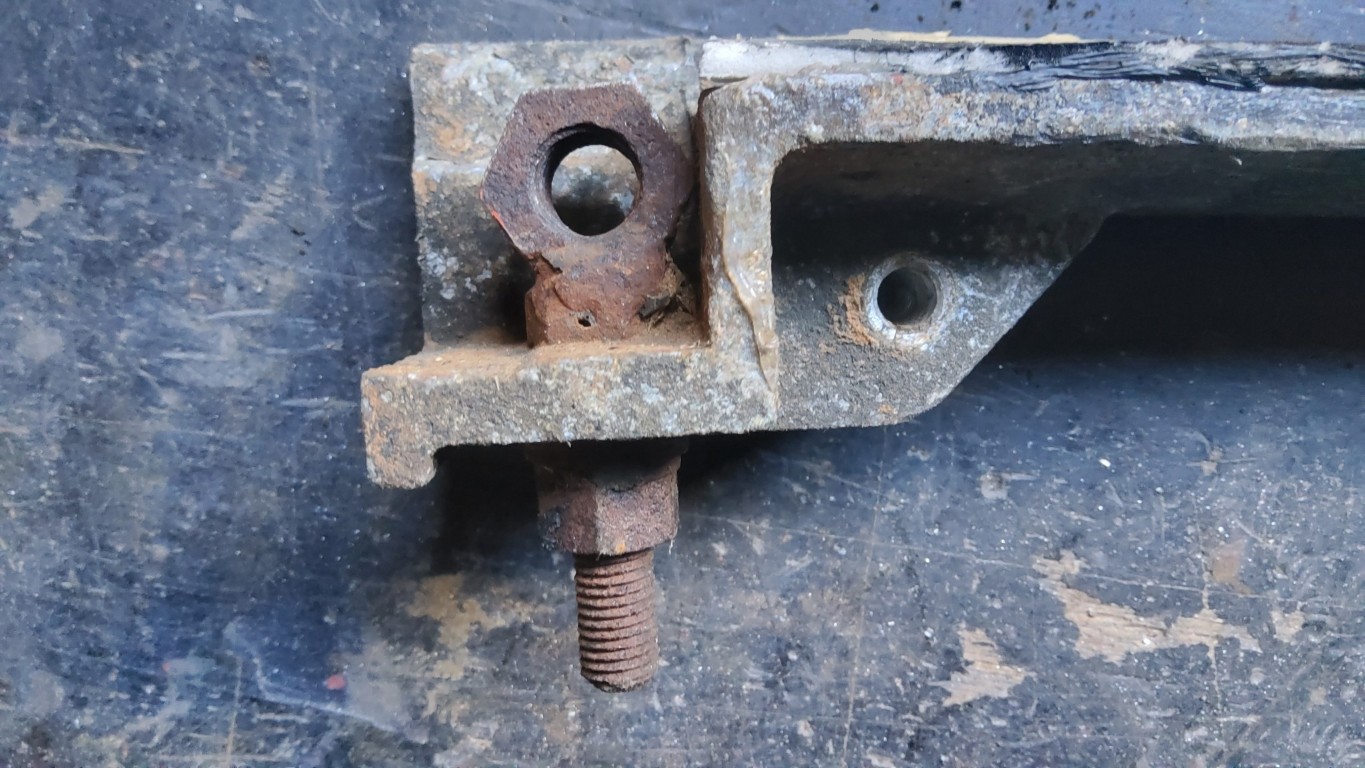
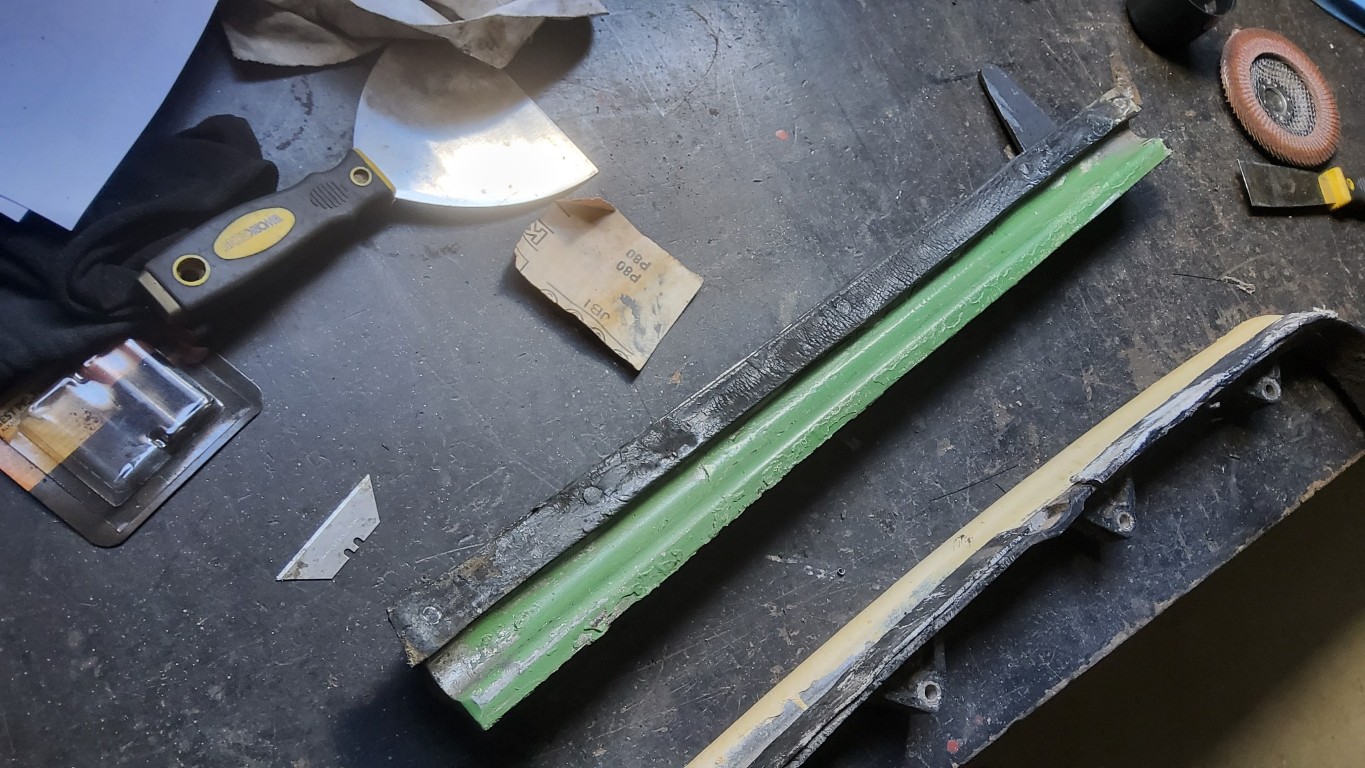
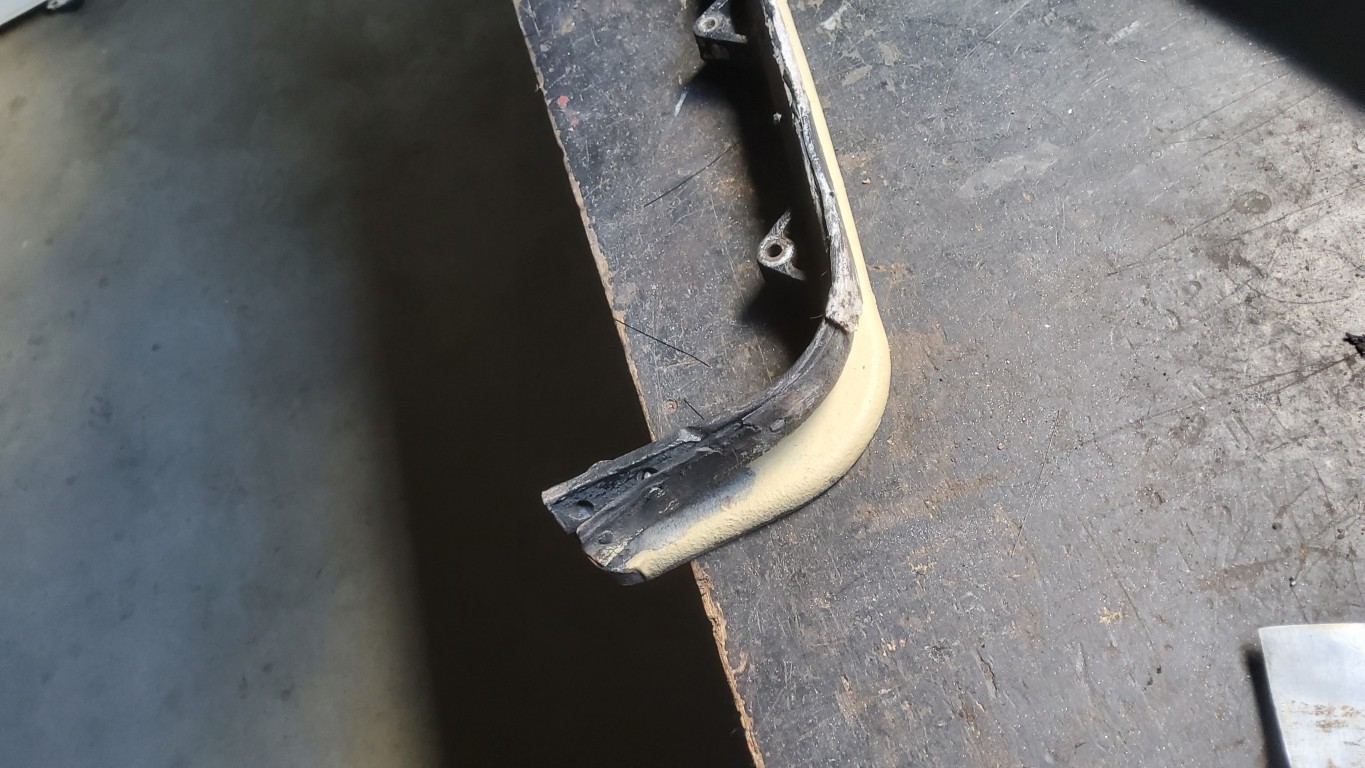
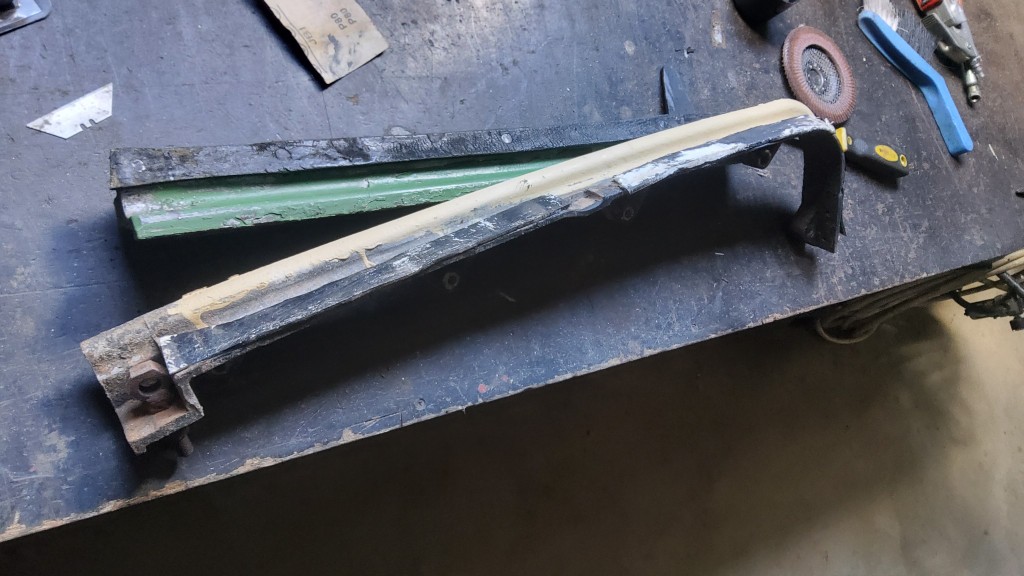
If you want to know what petrified rubber resembles, than hard leather comes to mind.
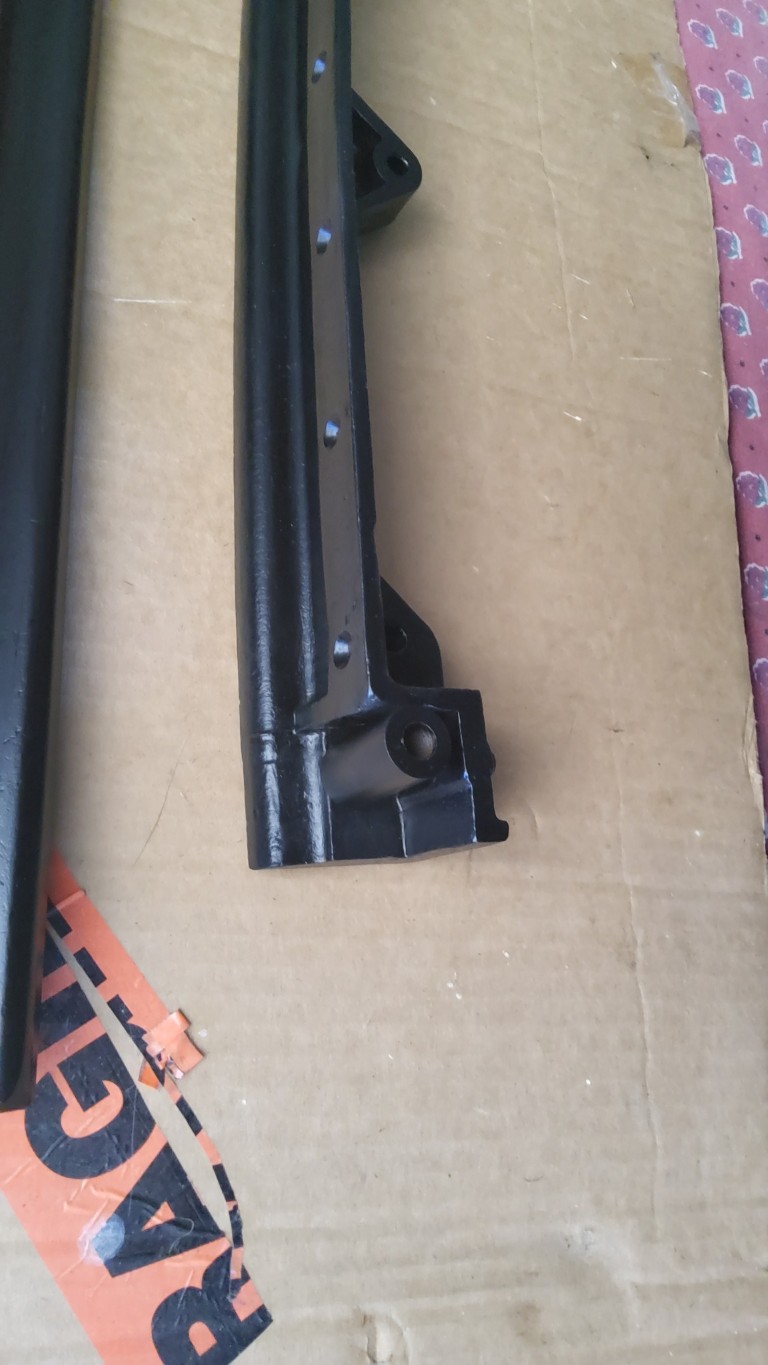
I thought it might be easier to replace the rubber with new by taking the 2 pieces that hold the bonnet
in place on the firewall off so as to clean and work on them on the bench.
I wouldn't have thought the eyeball pictured is from the factory looking like that.
I definitely am suffering from some sort of ADHT.
If you want to know what petrified rubber resembles, than hard leather comes to mind.
I thought it might be easier to replace the rubber with new by taking the 2 pieces that hold the bonnet
in place on the firewall off so as to clean and work on them on the bench.
I wouldn't have thought the eyeball pictured is from the factory looking like that.
I definitely am suffering from some sort of ADHT.
Norman Julian
Just had a better look after I pulled it off and it is leather, no rubber.
Stuart Brown
Car/Bus restorers OCD
Very interesting seeing the parts of this restored.
Just had a better look after I pulled it off and it is leather, no rubber.
Stuart Brown
Car/Bus restorers OCD
Very interesting seeing the parts of this restored.
Norman Julian 12th Nov
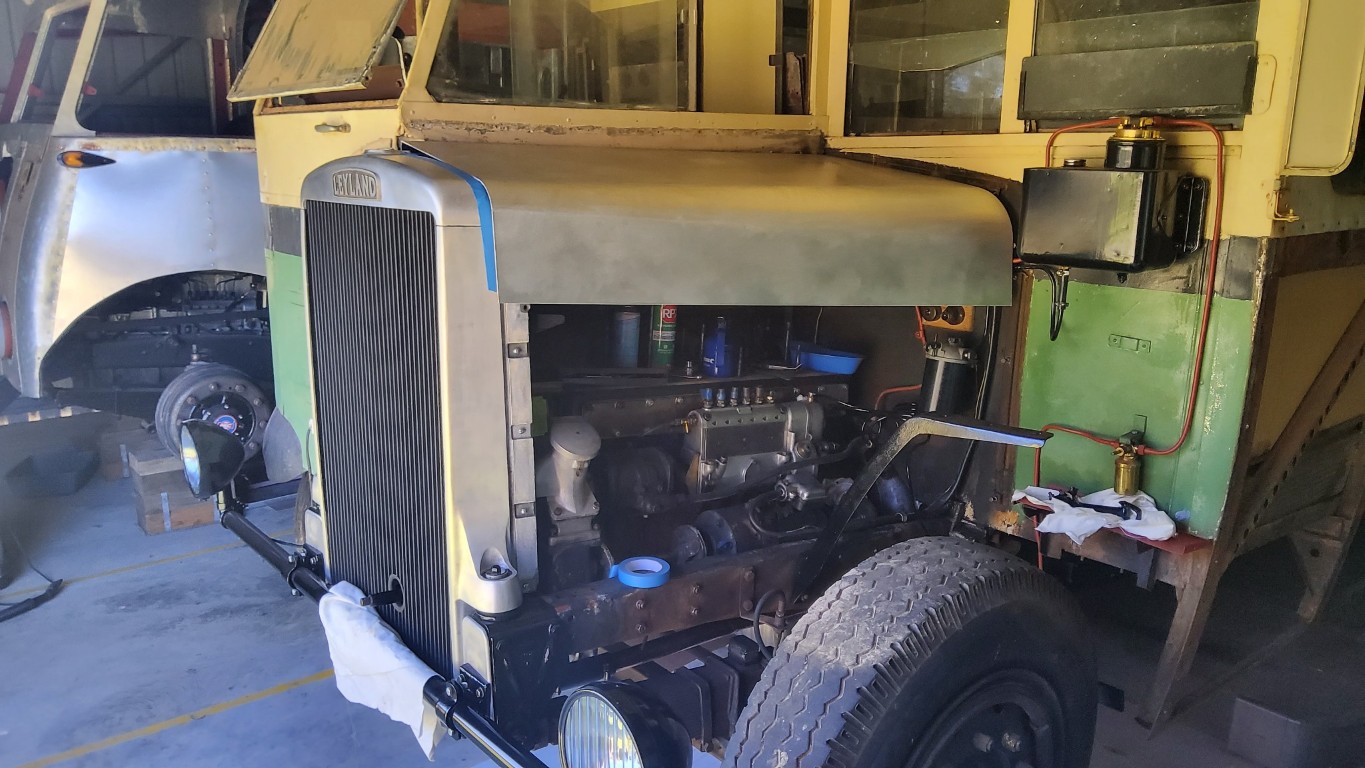
I put the new bonnet in its position to see how it will fit.
Unfortunately, without the back support brackets to hold it, I cannot adjust it as accurately as I would like,
so I will wait for the strip's of leather that I ordered last week so as to put them on before putting the brackets
back on the firewall.
This bonnet is a bit like the rear staircase, curves, angles and they have to be right or the whole thing will be a failure.
I'm changing the way the original was hinged mainly because I think it had been modified over the years and it is not good enough.
I have the fender to go on with and other jobs.
I put the new bonnet in its position to see how it will fit.
Unfortunately, without the back support brackets to hold it, I cannot adjust it as accurately as I would like,
so I will wait for the strip's of leather that I ordered last week so as to put them on before putting the brackets
back on the firewall.
This bonnet is a bit like the rear staircase, curves, angles and they have to be right or the whole thing will be a failure.
I'm changing the way the original was hinged mainly because I think it had been modified over the years and it is not good enough.
I have the fender to go on with and other jobs.
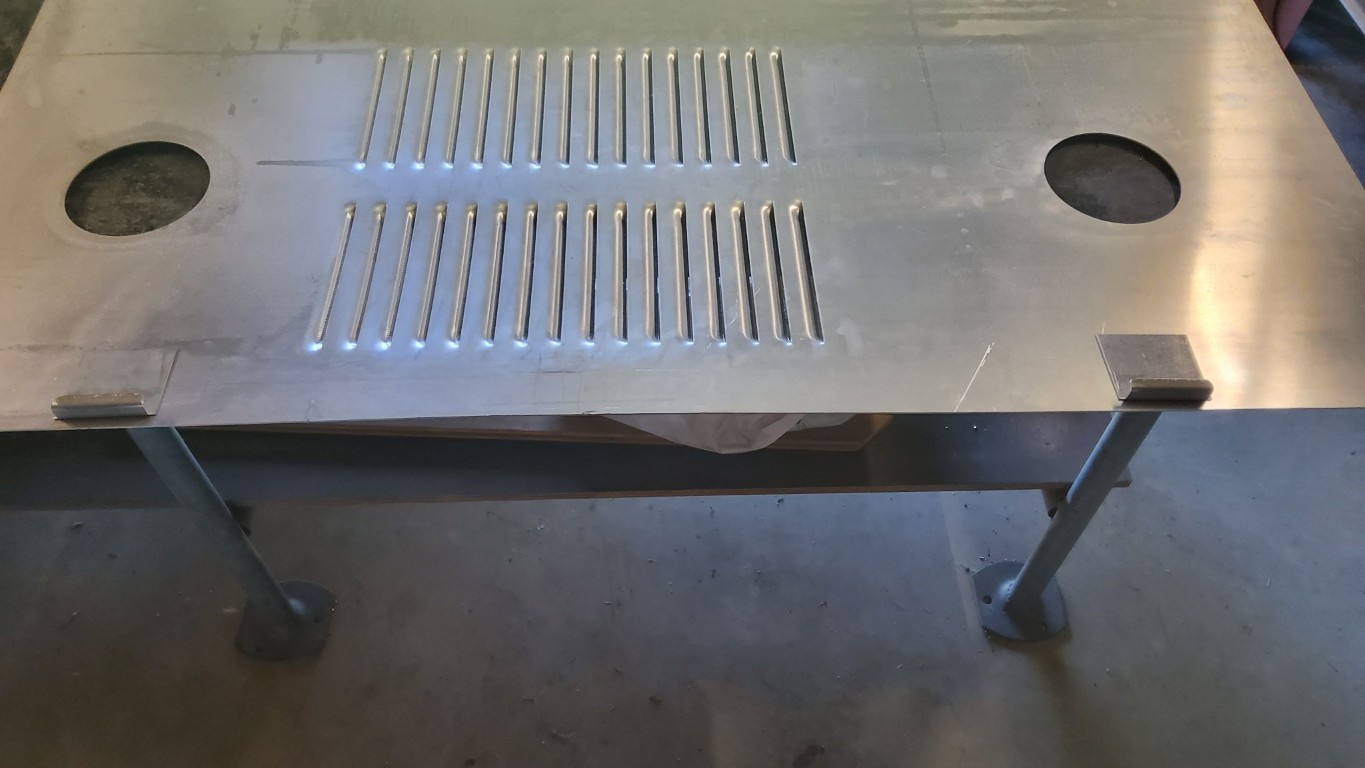
Norman Julian
New brackets for this panel.
It also has a bend in the area around where these louvres were cut.
Not sure how I will deal with that yet.
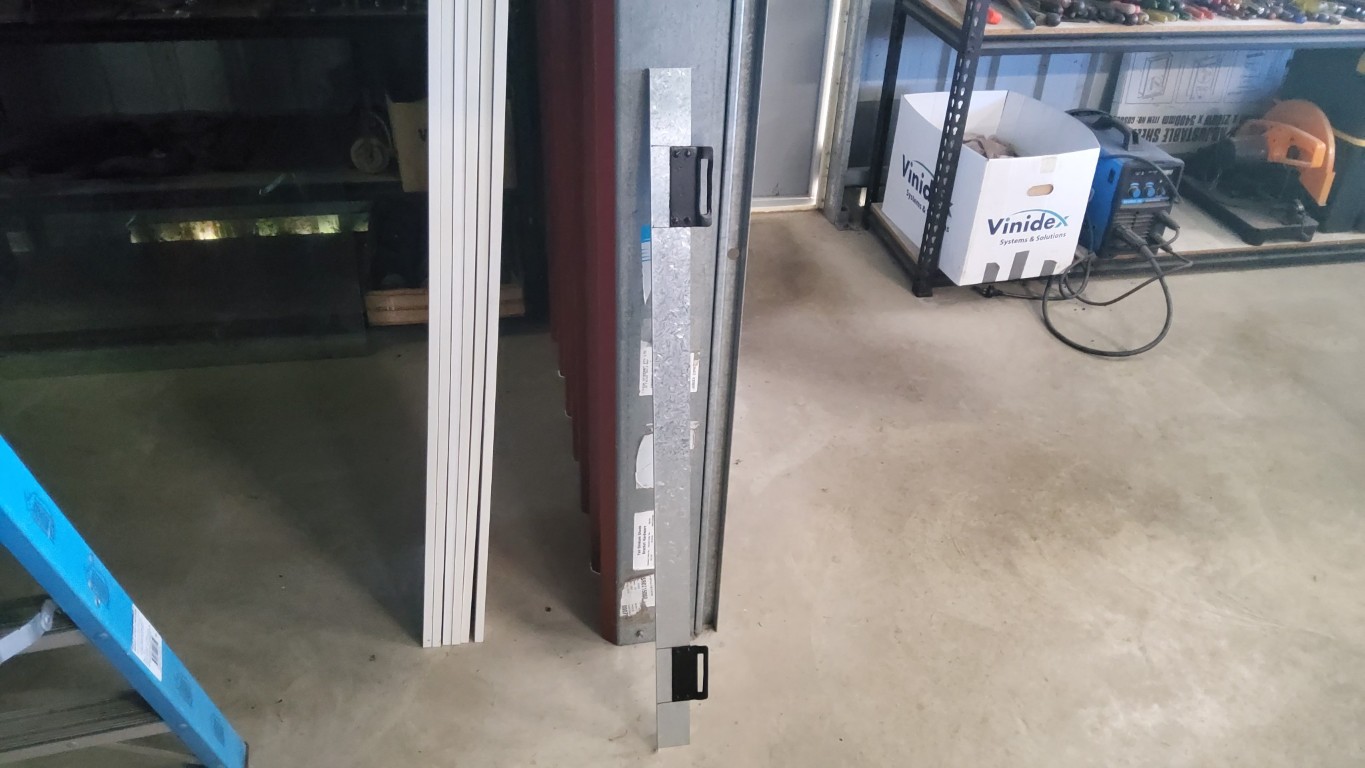
Norman Julian
This panel I made using the old brackets that the side louvred panel sits on.
Norman Julian 13th Nov
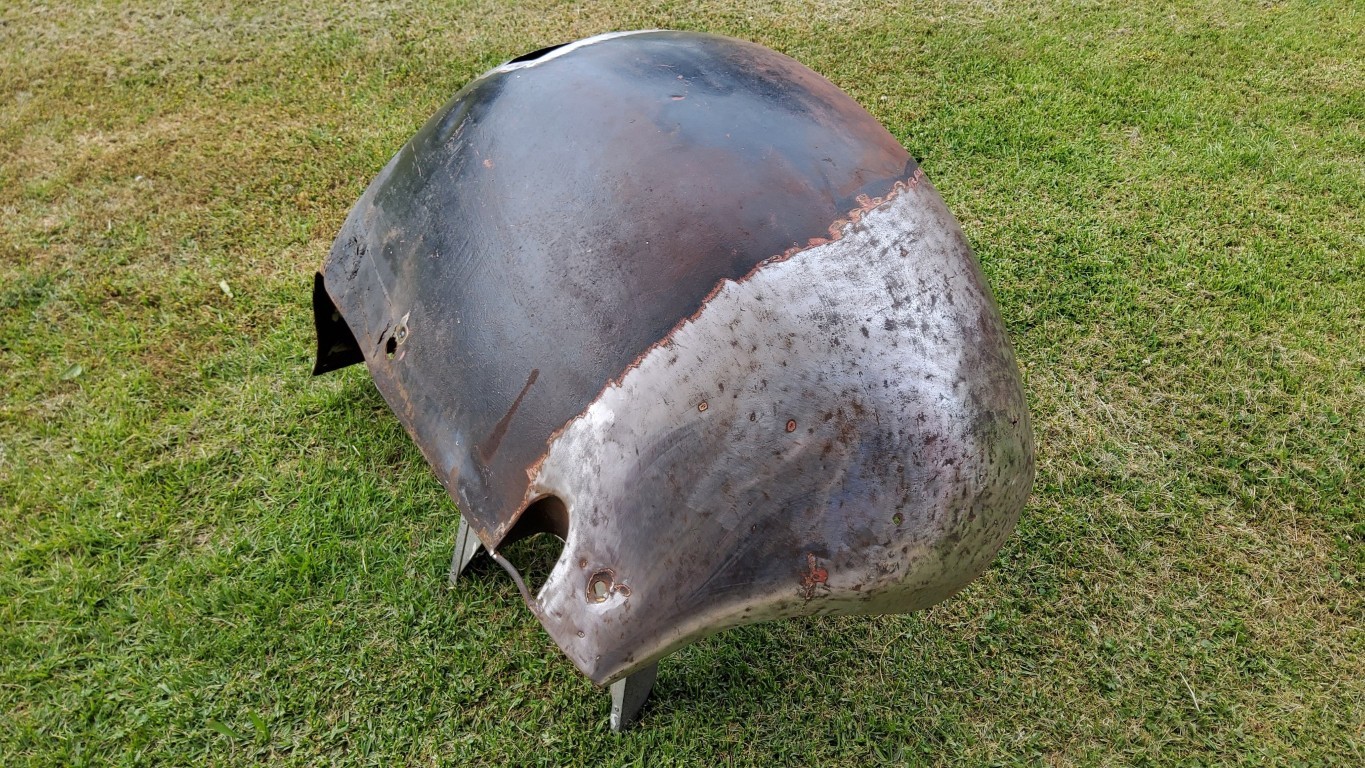
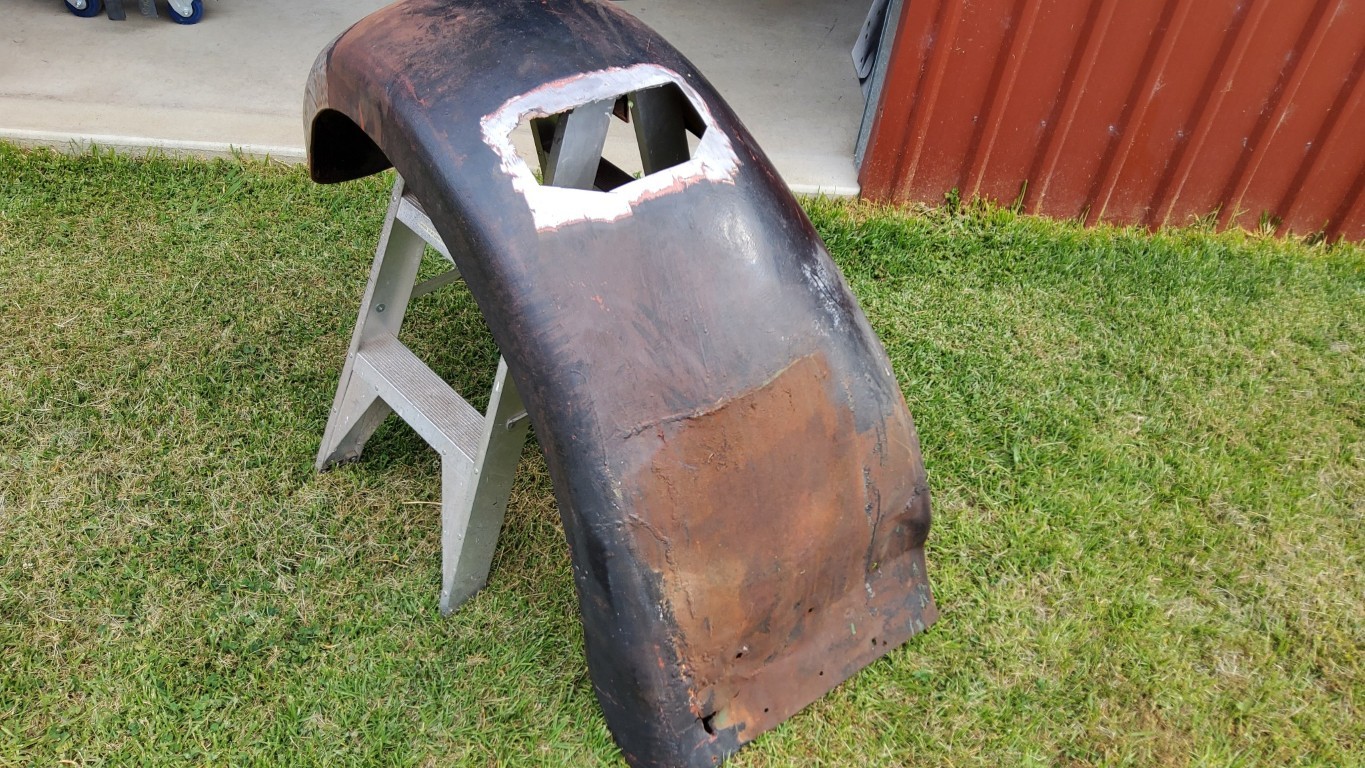
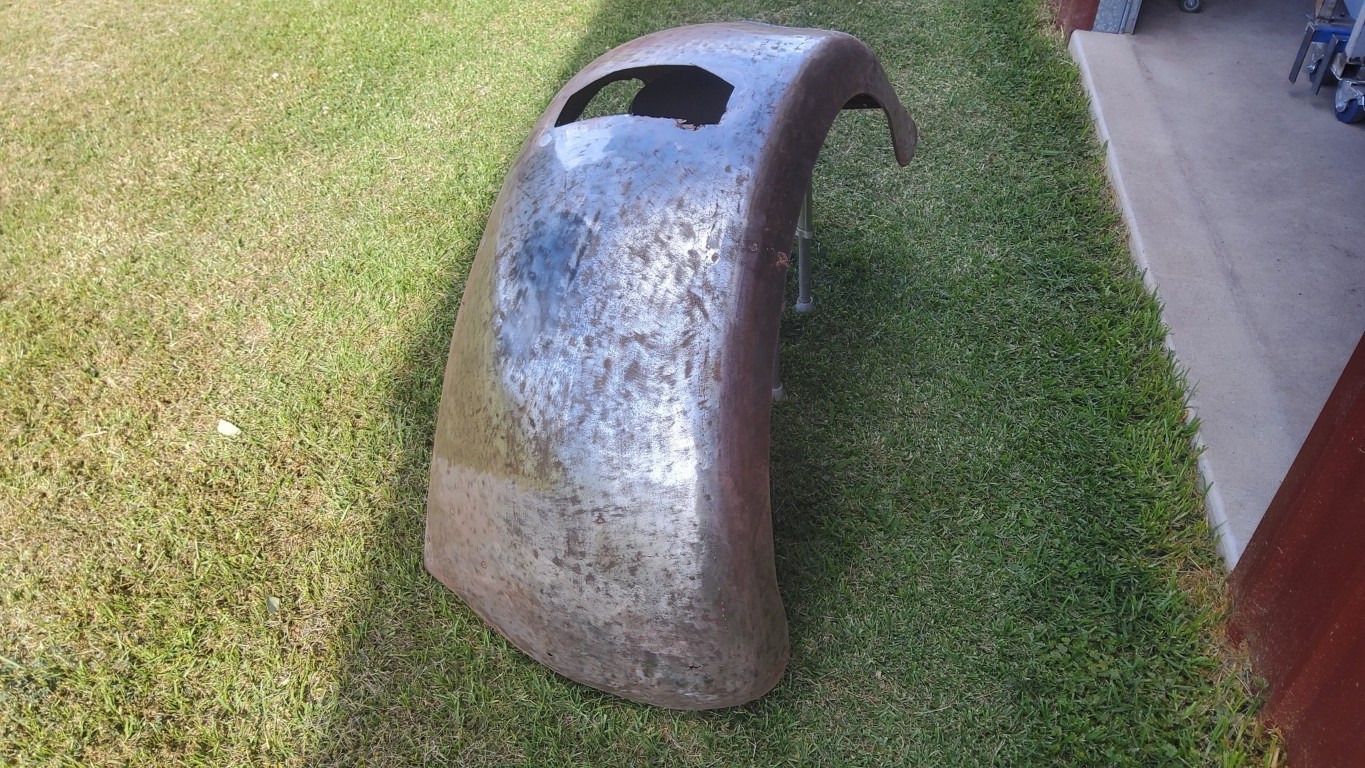
Poor old thing! If it wasn't for its history and unavailability, I would hoy this and start again.
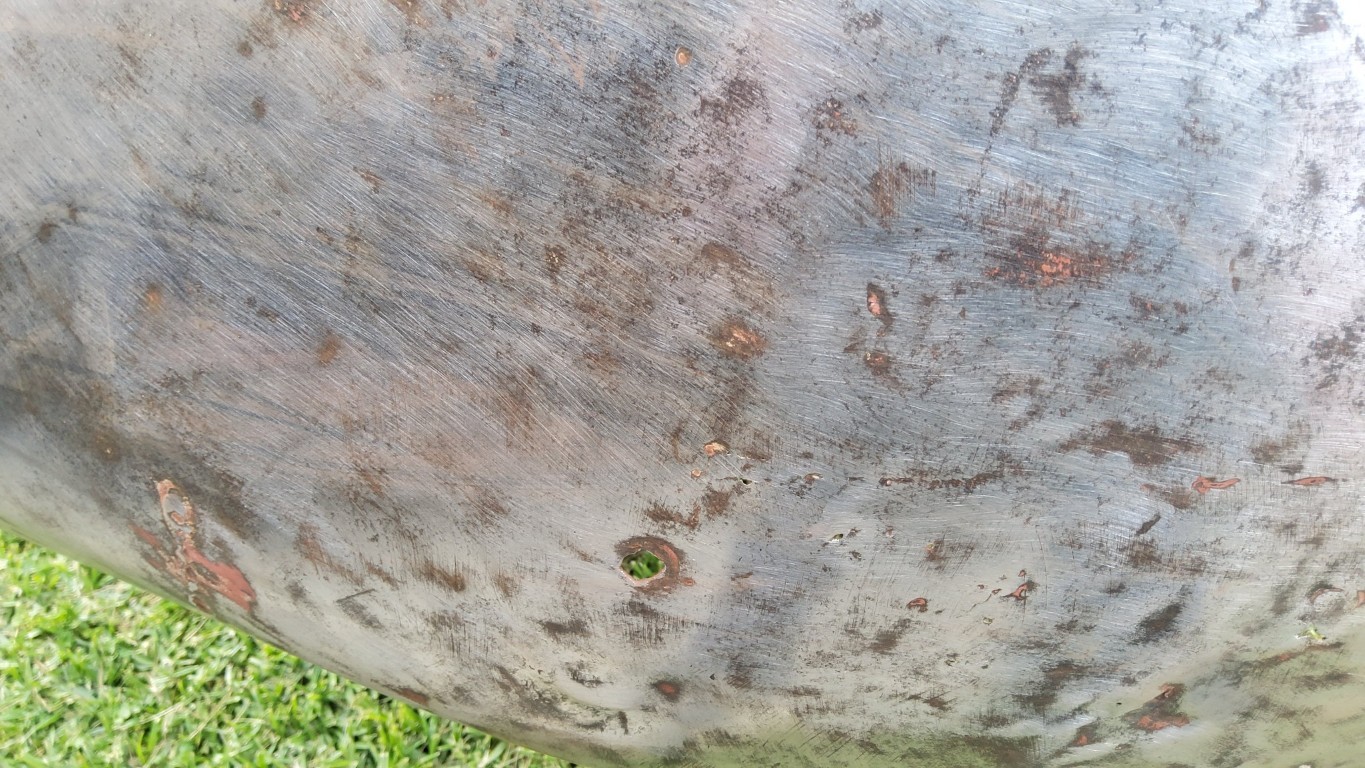
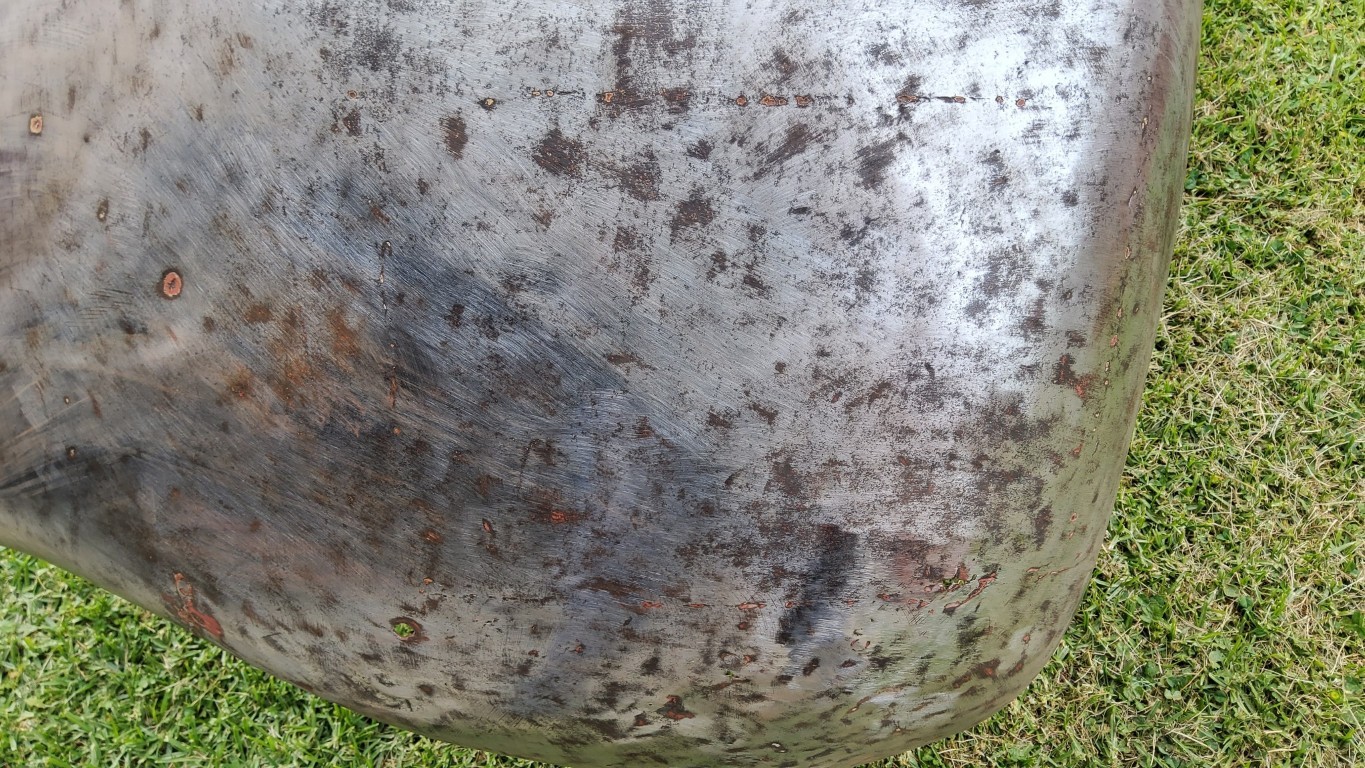
Just this sanded section alone has pin holes and minor and major dents in it.
It must have run into nearly everything in Sydney at one stage.
I noticed surface rust under the pick primer.
That must have a story attached to it.
Even sanding off the paint I found gravel and sticks and just about everything else in the paint.
Even a green paint run that was just painted over in black.
In the first shot, you can see the outline of a section welded in.
This will take quite a bit of time to do this I think.
Poor old thing! If it wasn't for its history and unavailability, I would hoy this and start again.
Just this sanded section alone has pin holes and minor and major dents in it.
It must have run into nearly everything in Sydney at one stage.
I noticed surface rust under the pick primer.
That must have a story attached to it.
Even sanding off the paint I found gravel and sticks and just about everything else in the paint.
Even a green paint run that was just painted over in black.
In the first shot, you can see the outline of a section welded in.
This will take quite a bit of time to do this I think.
David Wilson
I wouldn't try to remake it.
Get a wooden mallet and round the edges severely into a sort of half moon shape. Then start tapping the dents out.
Norman Julian
No no no, David. I will persevere with this and reuse it.
Pablo E. Laredo
Break out the oxy, and some old wire coat hangers to braze up the pinholes.
Stick/Mig or Tig would put too much heat onto it and distort the guard.
I dare say there'd be some unlucky apprentices who would have been given the task of straightening out Butler's bends.
My other thought and there's an OH&S caveat to this, you could passivate the patina areas and fill it with lead(Plumbers lead solder).
It's a process called lead wiping, which was how it was done before modern bog came into vogue.
Properly bonded lead wiping will move with the guard and not sink or crack like bog does.
It's soft enough to file or sand.
You must do it in a well ventilated area, and the use of nitrile gloves is recommended to handle the solder.
As with everything else you've achieved on this bus, this will be a cathartic experience.
Turning the clock back on 86 years worth of shortcuts is no mean feat.
Norman Julian
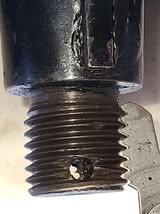
Out of all the jobs on all the buses it is the thread on the crank that is a real mystery.
According to the world according to Garth, there is no such thing as a 12tpi x 3/4" BSW thread.
The book says 10tpi.
If you go on line and have a look that 8s what it says.
Norman Julian
I wouldn't try to remake it.
Get a wooden mallet and round the edges severely into a sort of half moon shape. Then start tapping the dents out.
Norman Julian
No no no, David. I will persevere with this and reuse it.
Pablo E. Laredo
Break out the oxy, and some old wire coat hangers to braze up the pinholes.
Stick/Mig or Tig would put too much heat onto it and distort the guard.
I dare say there'd be some unlucky apprentices who would have been given the task of straightening out Butler's bends.
My other thought and there's an OH&S caveat to this, you could passivate the patina areas and fill it with lead(Plumbers lead solder).
It's a process called lead wiping, which was how it was done before modern bog came into vogue.
Properly bonded lead wiping will move with the guard and not sink or crack like bog does.
It's soft enough to file or sand.
You must do it in a well ventilated area, and the use of nitrile gloves is recommended to handle the solder.
As with everything else you've achieved on this bus, this will be a cathartic experience.
Turning the clock back on 86 years worth of shortcuts is no mean feat.
Norman Julian
Out of all the jobs on all the buses it is the thread on the crank that is a real mystery.
According to the world according to Garth, there is no such thing as a 12tpi x 3/4" BSW thread.
The book says 10tpi.
If you go on line and have a look that 8s what it says.
Norman Julian
Norman Julian 14 Nov
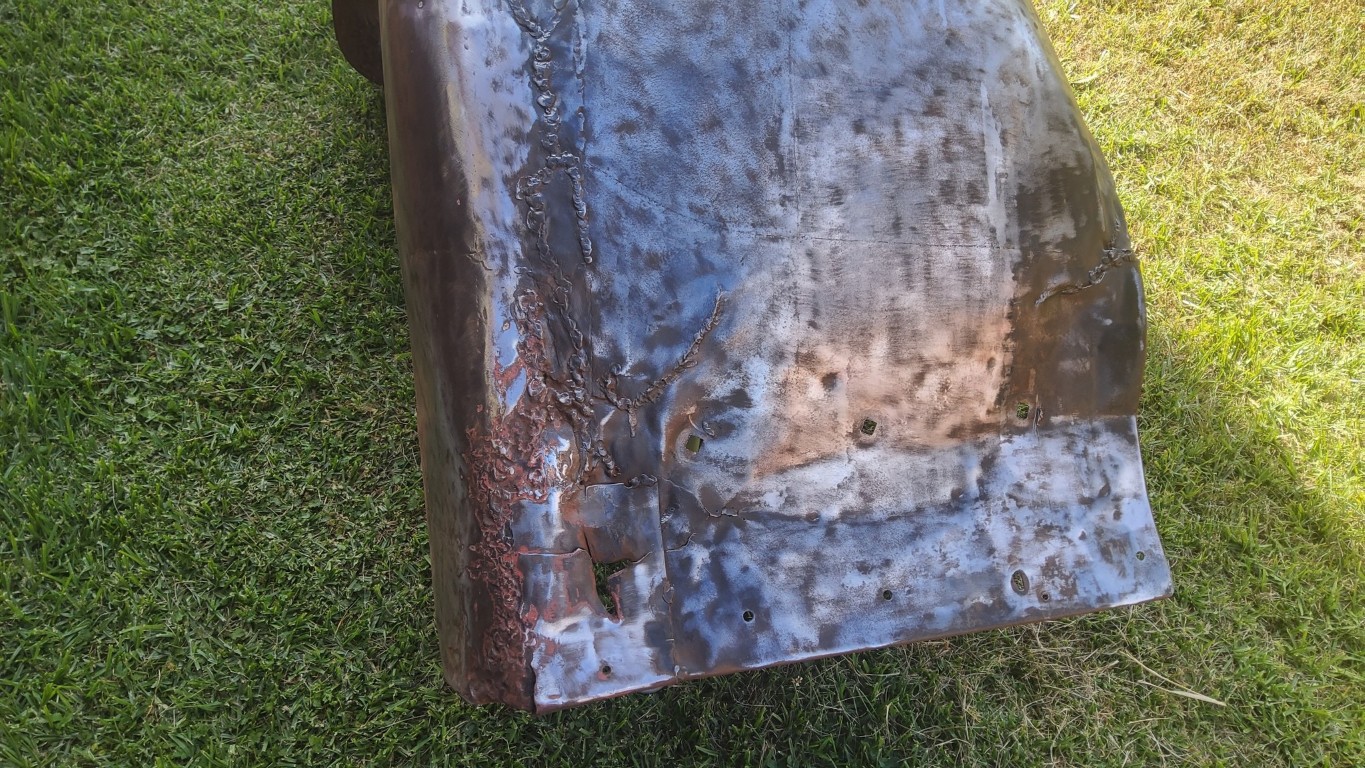
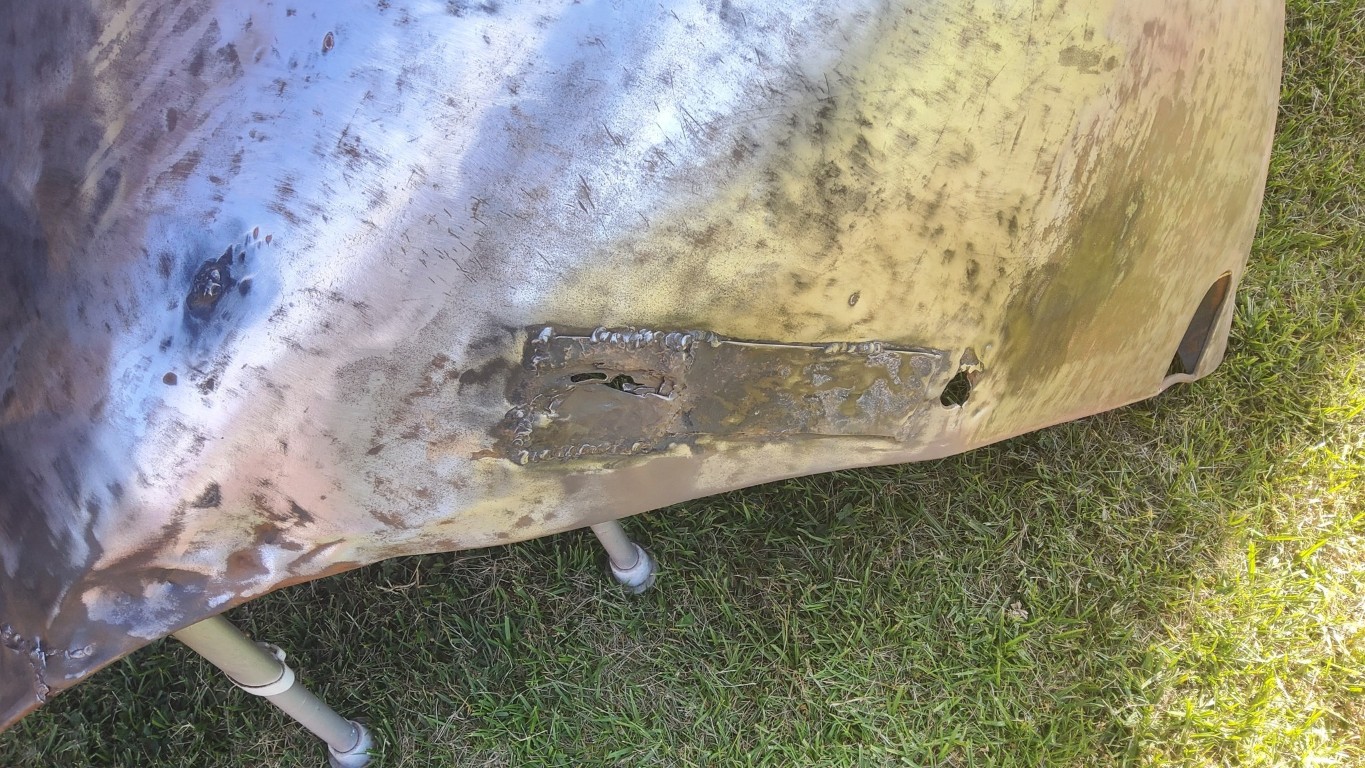
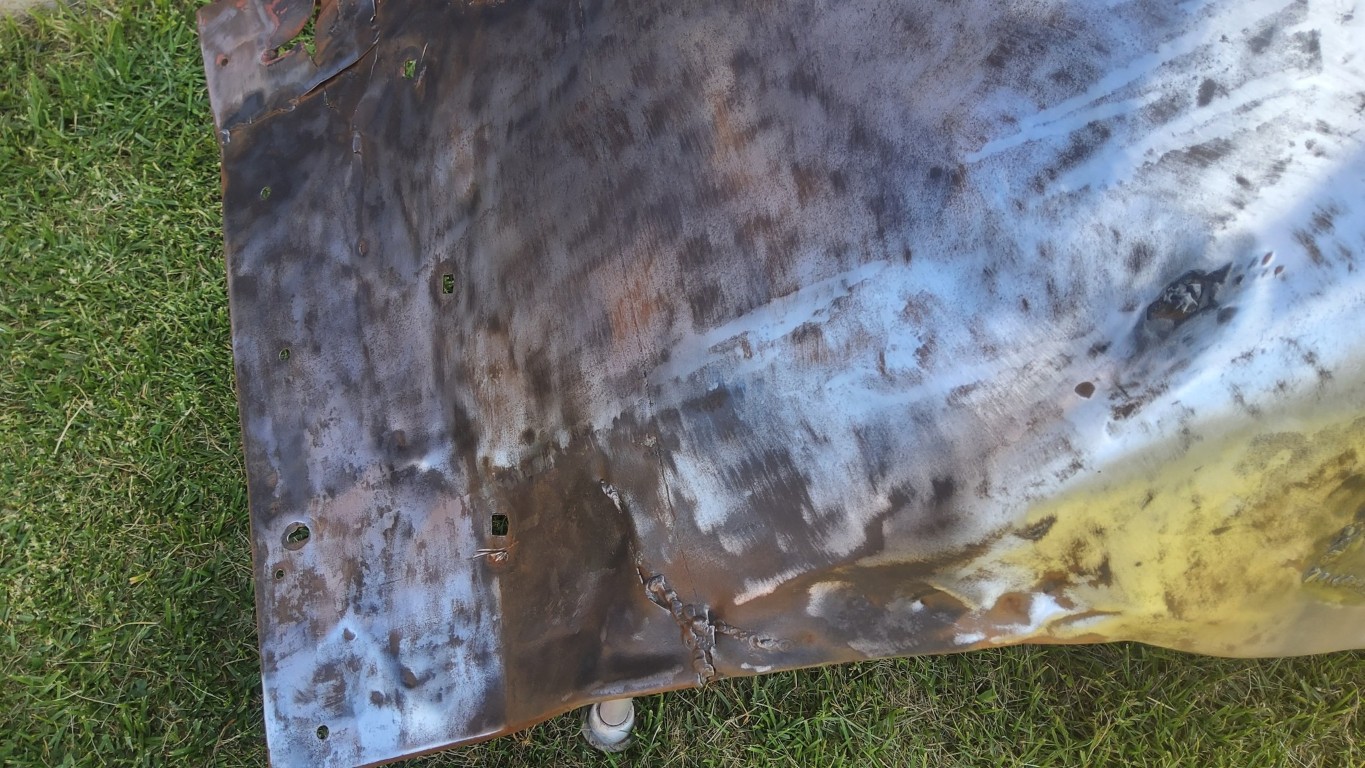
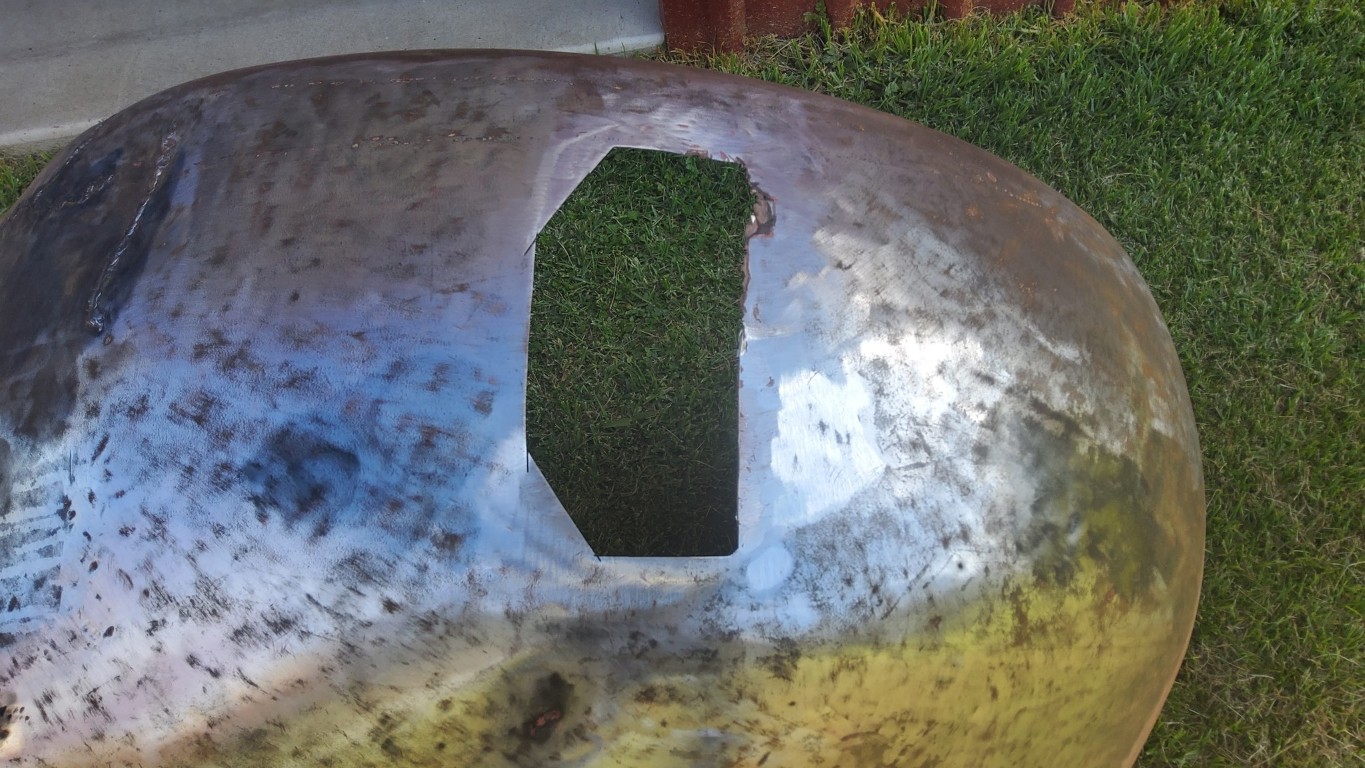
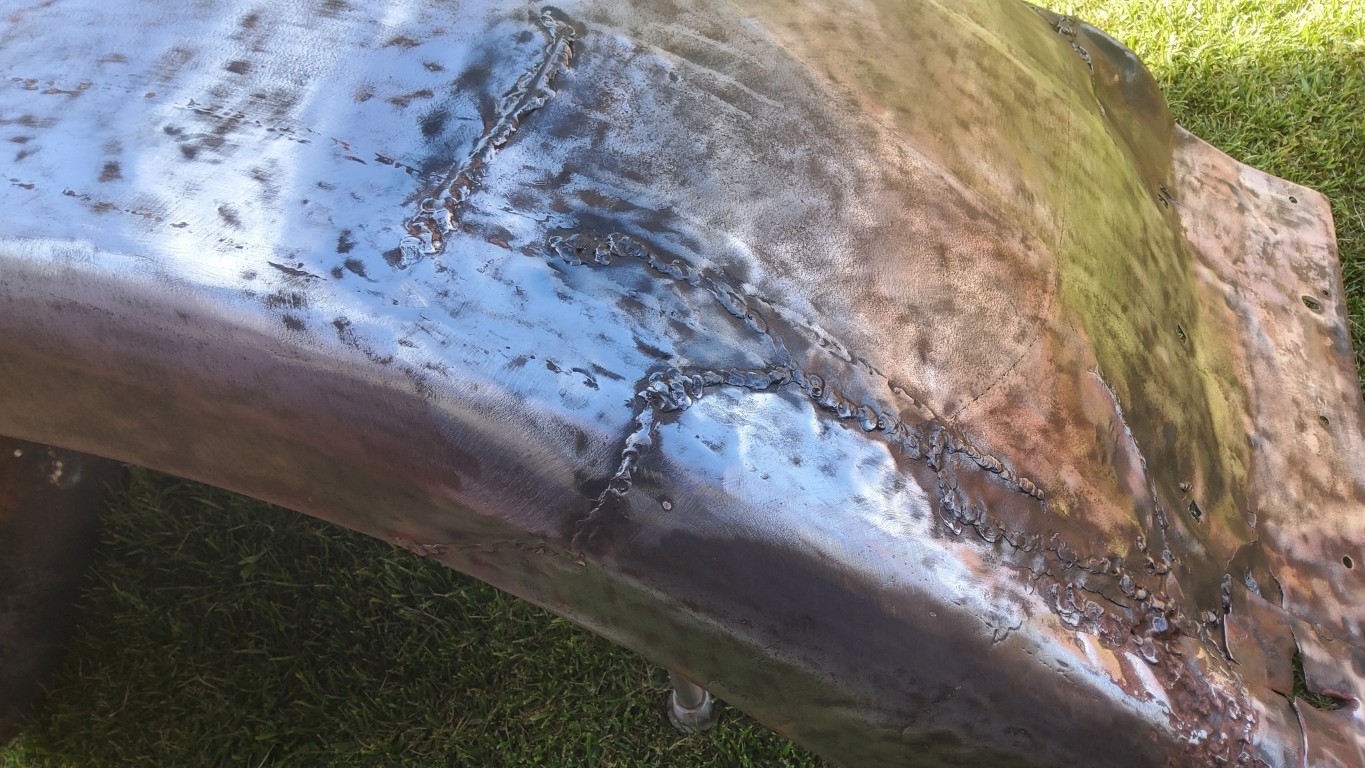
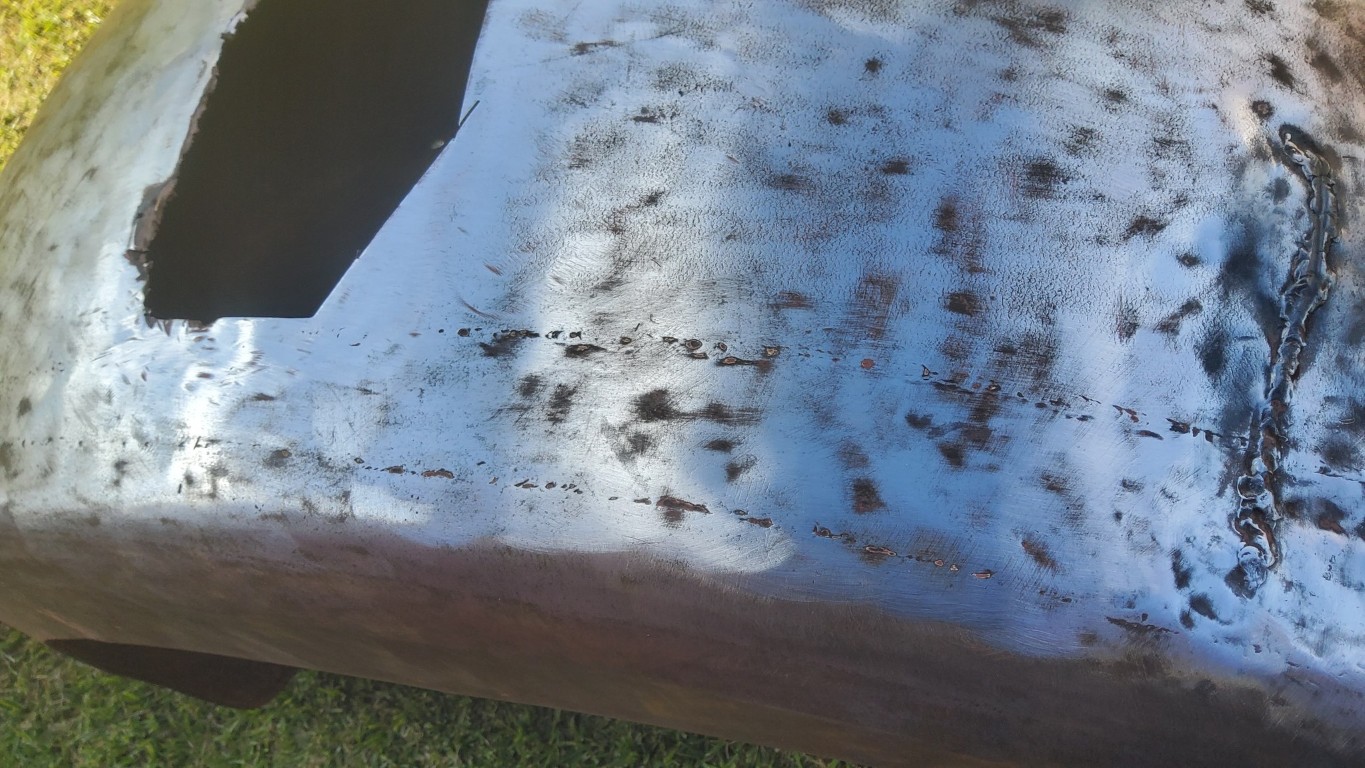
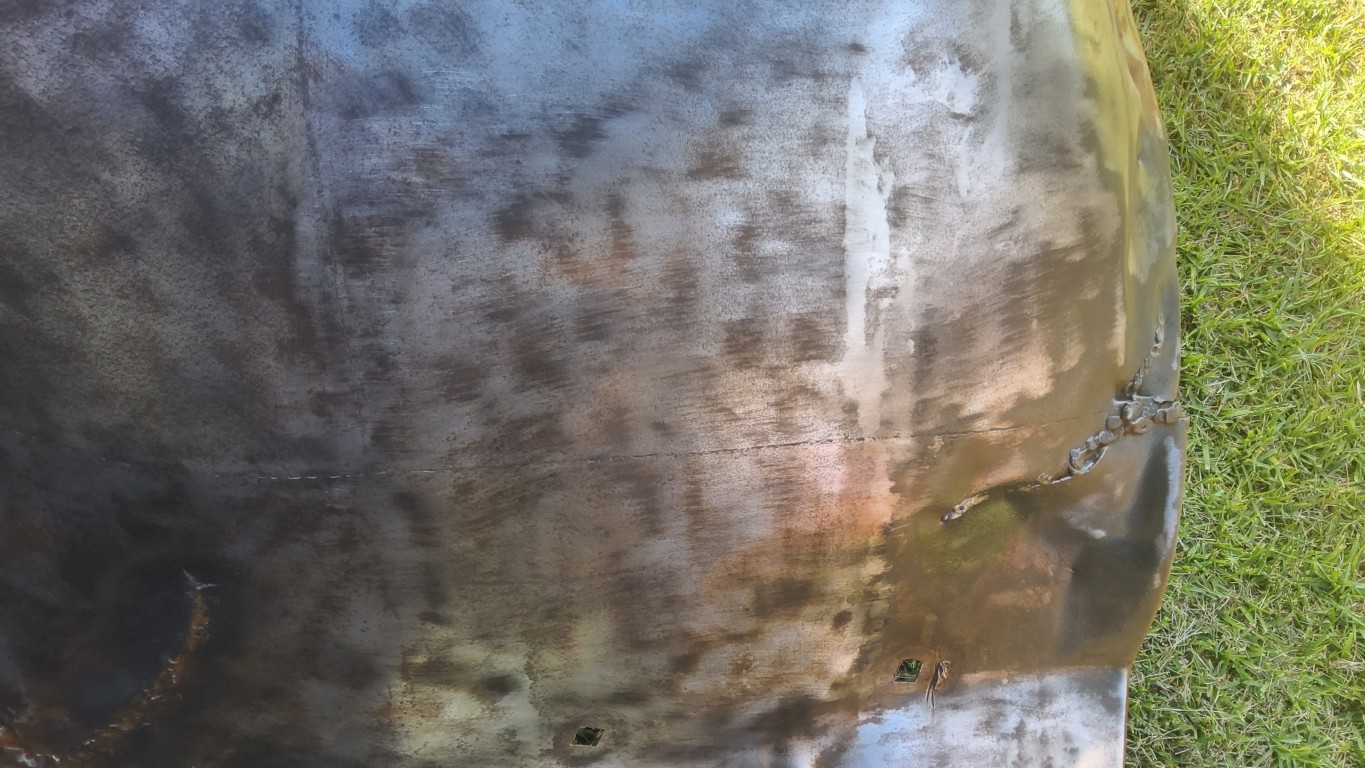
It took about 3 hrs to strip this and now we can see just how much work is ahead.
If you look closely you can see the original factory welding which is first class.
I have found 6 different sections so far that makes up this guard.
It is hard to know where to start this arduous repair.
It took about 3 hrs to strip this and now we can see just how much work is ahead.
If you look closely you can see the original factory welding which is first class.
I have found 6 different sections so far that makes up this guard.
It is hard to know where to start this arduous repair.
Norman Julian 15th Nov
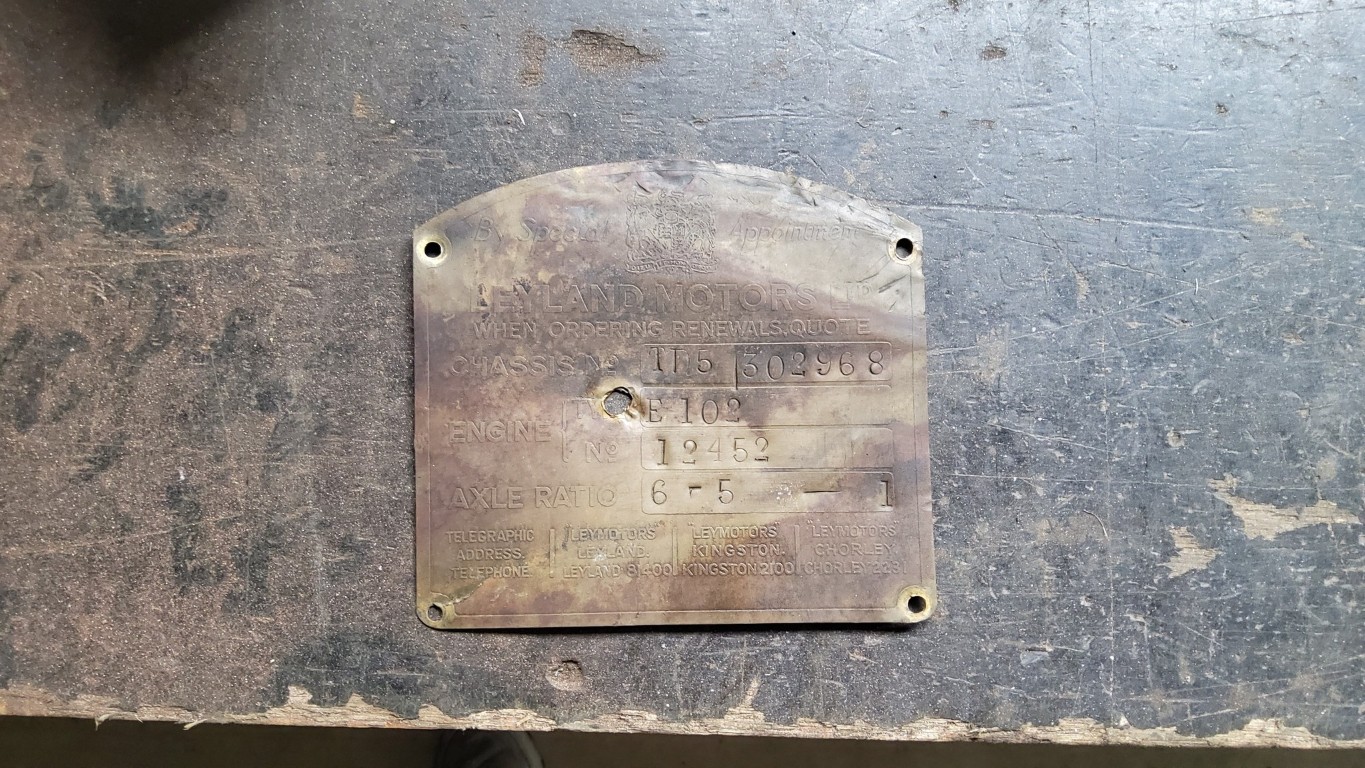
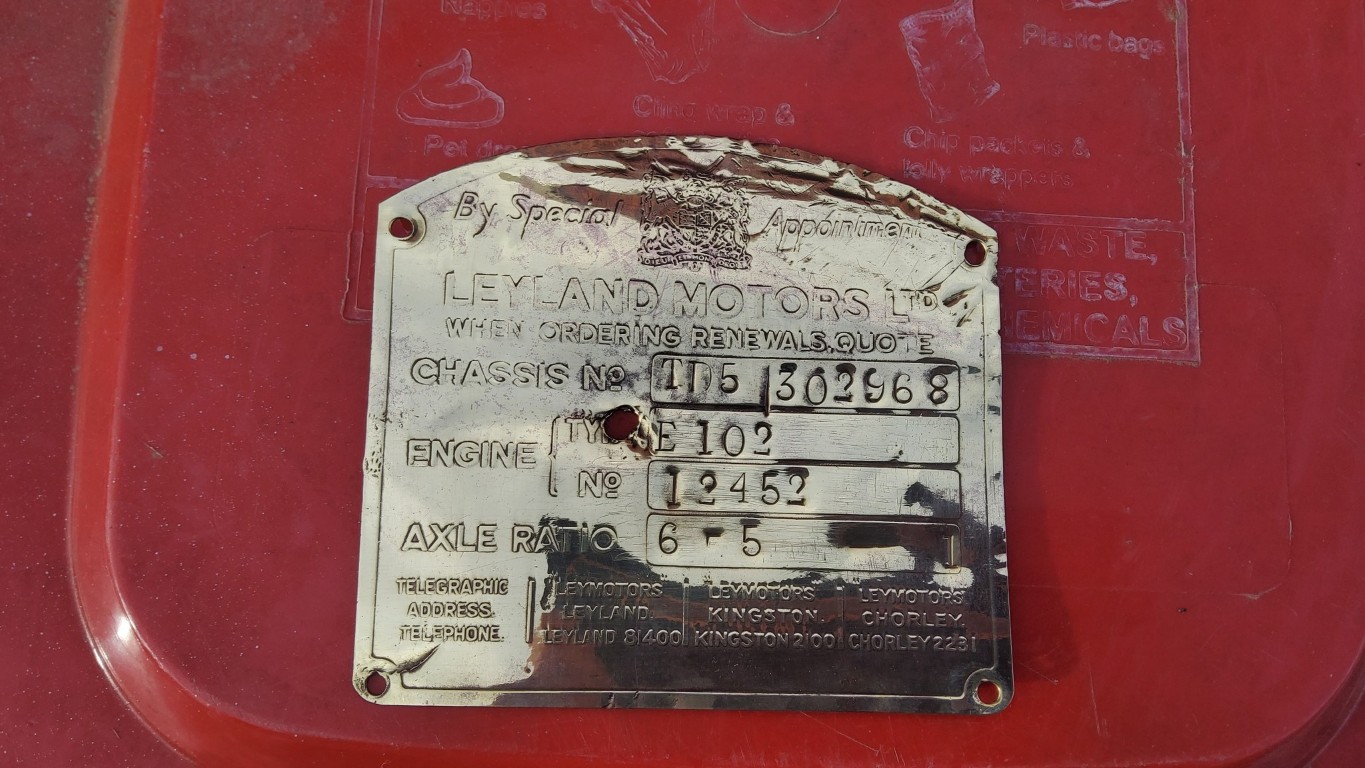
Little improvement on what was! I hope this is the original plate because it had fresh rivets holding it on.
Little improvement on what was! I hope this is the original plate because it had fresh rivets holding it on.
This site is hosted on
Crazy Domains & Hosting  Unlimited Web Hosting |
Last updated November, 2025 |
This web site may contain Copyright material If you find any problems with the site, please email the Web Editor  |